
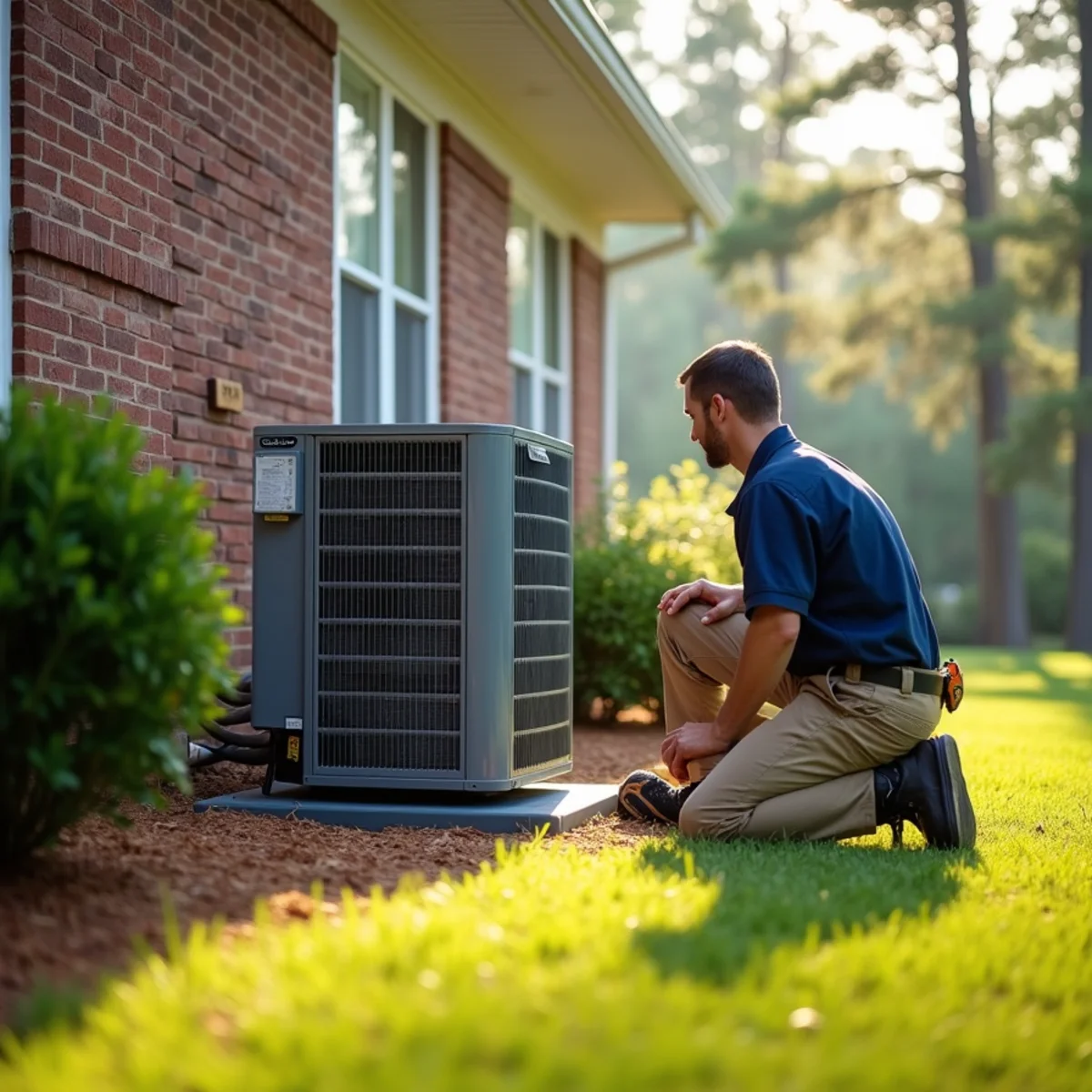
Matthews, NC · Mecklenburg & Union counties
24/7 Heating and Air Conditioning Services in Matthews, NC
AC blowing warm, heat pump iced over, furnace out on a freezing night: one call reaches a person any hour, and a licensed HVAC technician comes out with the price before the work.
- 24/7 live answer
- Licensed and insured HVAC technicians
- Price before work starts
By the Littleton Premier Heating & Air team · Updated
Heating and air for Matthews, without the guesswork
When the air conditioner quits on a sticky July afternoon, the thermostat tells you almost nothing. A dead run capacitor, a float switch tripped by a clogged condensate line in the attic, a refrigerant leak and a worn-out compressor all look the same from the hallway: the fan runs and the upstairs keeps getting warmer.
Guessing is how a small repair turns into a big bill. Running a frozen coil, resetting a breaker over and over, or adding refrigerant every summer without finding the leak each make the next visit more expensive.
Littleton Premier Heating & Air answers (321) 478-0693 24 hours a day and sends a licensed, insured North Carolina HVAC technician to homes in Matthews and the towns around it. The technician diagnoses first, explains what failed and gives you the price before any repair: air conditioners, heat pumps, gas furnaces, dual-fuel systems, ductless mini-splits and the attic and crawl space ductwork that connects it all.
AC or heat out right now?
Four safe checks, then call
- 1Thermostat: set to Cool (or Heat), a few degrees past room temperature, fresh batteries if the screen is blank.
- 2Breakers and switches: look for a tripped breaker for the outdoor unit or air handler, and the service switch at the furnace. Reset a breaker once. If it trips again, leave it off.
- 3Filter: a filter clogged with spring pollen can freeze the coil in summer and trip the furnace limit switch in winter.
- 4Ice, water through a ceiling or a burning smell: turn the system off and call (321) 478-0693. We answer 24/7.
While you wait: move pets and anyone elderly, very young or unwell to the coolest (or warmest) room, and photograph the thermostat, the model plate, any error code and any water or ice before you clean up. Those photos help the technician; opening panels, refrigerant lines or gas equipment does not.
Smell gas or hear a CO alarm? Leave the house first. From outside, call Piedmont Natural Gas or 911. Do not flip switches, use the thermostat or try to find the leak.
Call (321) 478-0693Full checklist: 7 things to check when the AC stops working.
What we handle
HVAC services for Matthews homes
Cooling, heating and the ducts in between. Each page explains how the work is done in a Piedmont house, what it involves and what to ask before anyone starts.
AC Repair
Warm air from the vents, an outdoor unit that hums and will not start, ice on the copper line or water dripping from the attic air handler. The technician we send measures the system, explains what failed and gives you a written price before any repair. Capacitors, contactors, leaks, coils and drains.
Learn moreFurnace and Heating Repair
No heat on a cold night, a furnace that clicks and never lights, or burners that start and quit. The technician we send checks the igniter, flame sensor, inducer, blower and control board, tests the venting and safety controls, and puts the repair price in writing before any work begins.
Learn moreHeat Pump Repair and Replacement
A heat pump cools all summer and heats all winter, so it wears through both seasons. We handle cold air in January, an outdoor unit caked in ice, a system stuck on auxiliary heat, and reversing valve or defrost board failures. When replacement makes more sense, the technician prices a heat pump or dual-fuel system in writing.
Learn moreHVAC Installation and Replacement
Most Matthews homes went up between 1985 and 2005, so many are on their second or third system. We dispatch licensed HVAC contractors who run a load calculation, check the ducts and quote a heat pump, gas furnace with AC, dual-fuel or ductless system in writing, with the permit and inspection handled.
Learn moreDuctwork Repair and Humidity Control
Hot upstairs bedrooms, a musty smell or bills that keep climbing often trace back to the ducts. We dispatch licensed HVAC contractors to inspect crawl space and attic ductwork, repair rusted or sagging runs, seal leaks, and add whole-home dehumidifiers and better filtration for humid Matthews summers and heavy pine pollen.
Learn more24/7 Emergency HVAC Repair
No cooling in a heat wave or no heat on a freezing night? A live person answers any hour, walks you through safe checks and dispatches the nearest available licensed HVAC technician. Timing is confirmed on the call, never guessed, and you hear the price, including any after-hours charge, before work starts.
Learn moreNot sure which one you need?
Tell us what the system is doing and we'll send the right technician. Tune-ups, thermostats, mini-splits and dehumidifiers are handled under the services above.
Local knowledge
HVAC problems we see in Matthews homes
Matthews went from about 1,600 people in 1980 to 13,651 in 1990 and 29,435 at the 2020 Census, so nearly the whole town was built in the last 45 years. The median home dates to about 1994: two-story subdivision houses in neighborhoods like Sardis Plantation, Brightmoor and Matthews Plantation, with a heat pump or a gas furnace and AC, an air handler in the attic and ductwork in a crawl space.
Add a humid subtropical climate (long stretches near 90 degrees with heavy humidity, then winter nights below freezing and the odd ice storm), red clay that keeps crawl spaces damp, and a spring pollen season that turns outdoor coils yellow. Most of these homes are on their second or third system, and plenty of owners bought the house with equipment they know nothing about. A technician who knows these patterns checks the right parts first.
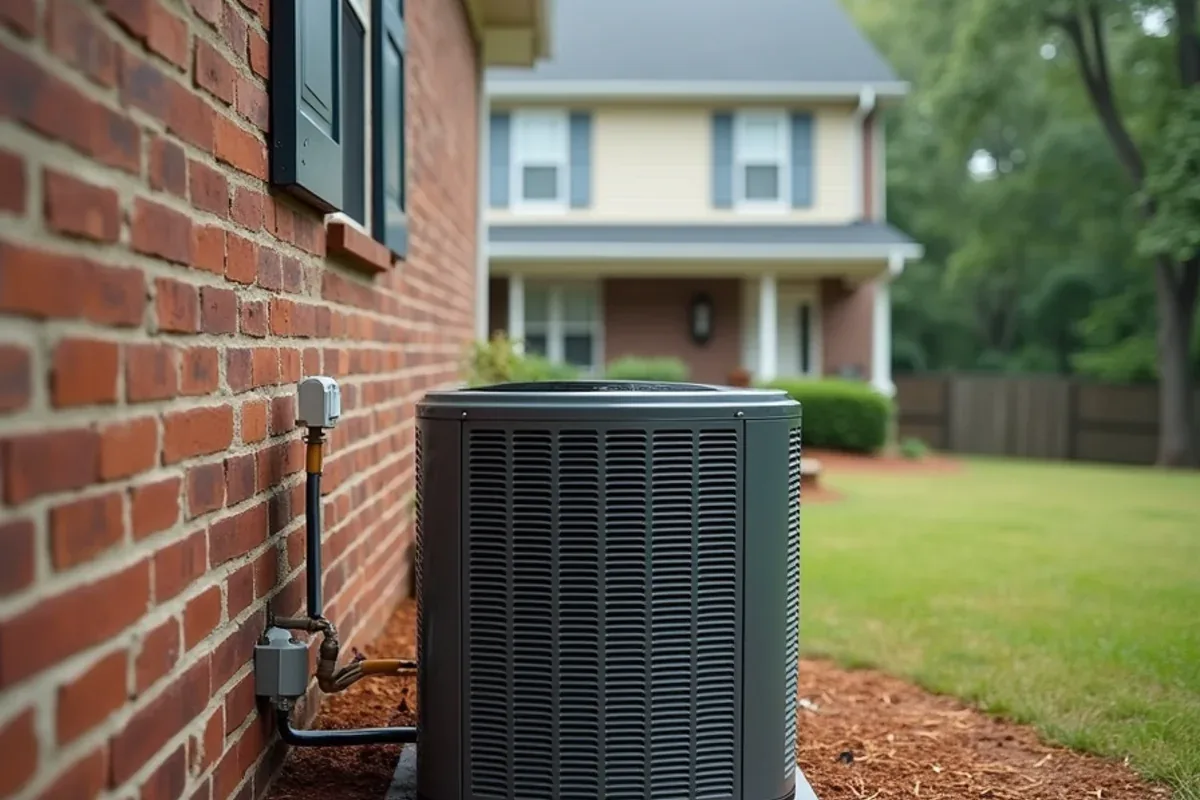
1990s and 2000s systems at the end of their life
The median Matthews home was built around 1994, so most original equipment is long gone and many houses are on their second or third system. The late-1990s and 2000s replacements are now 15 to 25 years old, some still on R-22 and many on R-410A, which is getting harder to buy as new systems move to R-454B and R-32.
More on HVAC installation and replacementLong, humid summers that wear out the outdoor unit
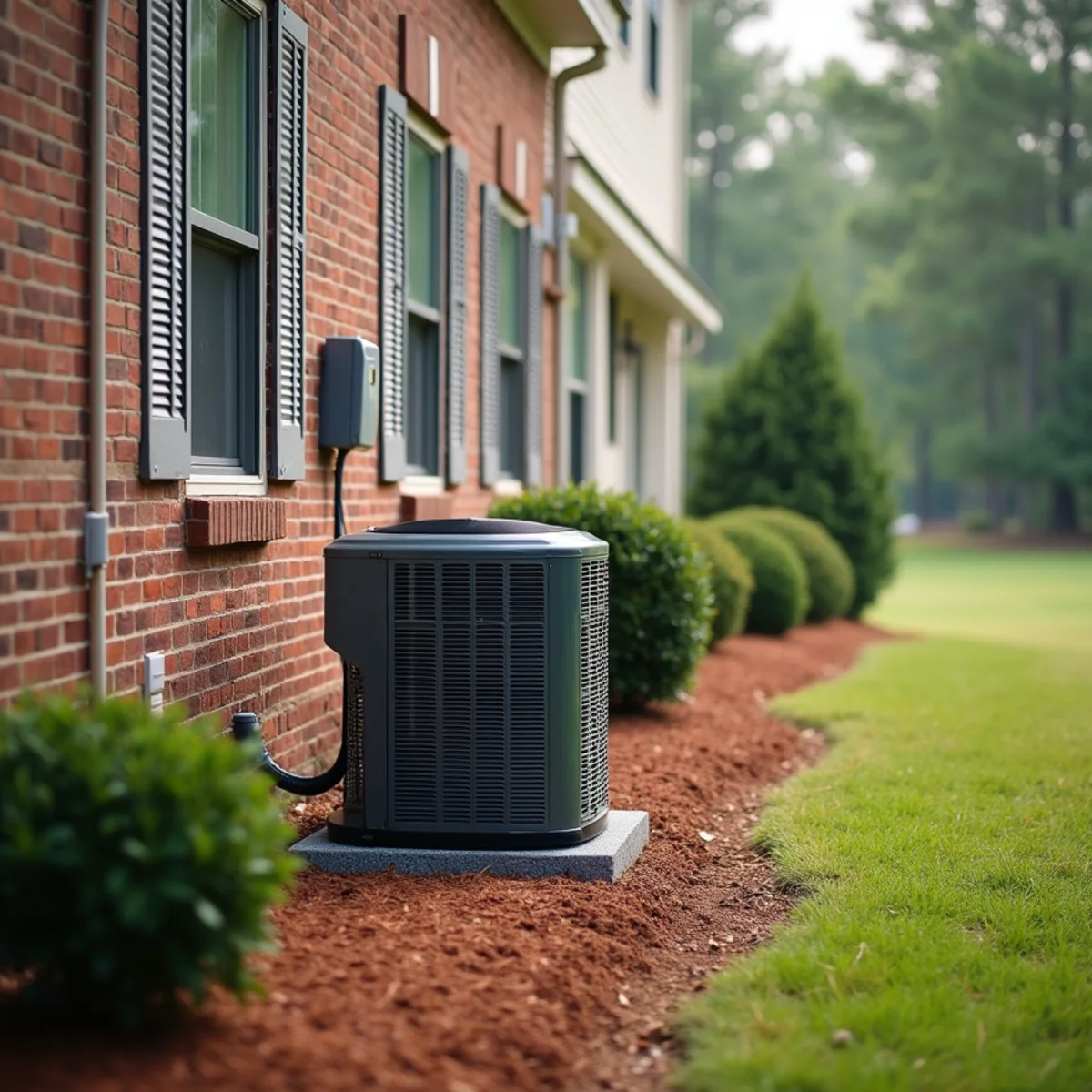
July and August in the Piedmont mean weeks near 90 degrees with heavy humidity, and an air conditioner that barely shuts off. That is when run capacitors, contactors, condenser fan motors and compressors fail, and when a slow refrigerant leak finally shows up as warm air at the vents.
More on AC repair in MatthewsWater from the attic air handler
Two-story homes here usually put the air handler in the attic. On a muggy day it pulls gallons of water out of the air, and an algae-clogged condensate line, a rusted pan or a missing float switch is how a stain appears on an upstairs ceiling.
More on condensate drain repairHeat pumps in a January cold snap
Heat pumps are the most common system in post-1990 Matthews homes. On a 25-degree night they run long, defrost often and lean on auxiliary heat strips, so a weak defrost board, a sticking reversing valve or a low charge turns into lukewarm air and a jump in the Duke Energy bill.
More on heat pump repair and replacementCrawl space ducts over damp red clay
Red clay holds water, and a vented crawl space stays damp most of the summer. Ductwork down there sweats, rusts, sags and pulls apart at the joints, and the house gets musty air, weak airflow and higher bills. Attic ducts in the same homes cook in summer heat.
More on ductwork repair and humidity controlHot second floors and bonus rooms
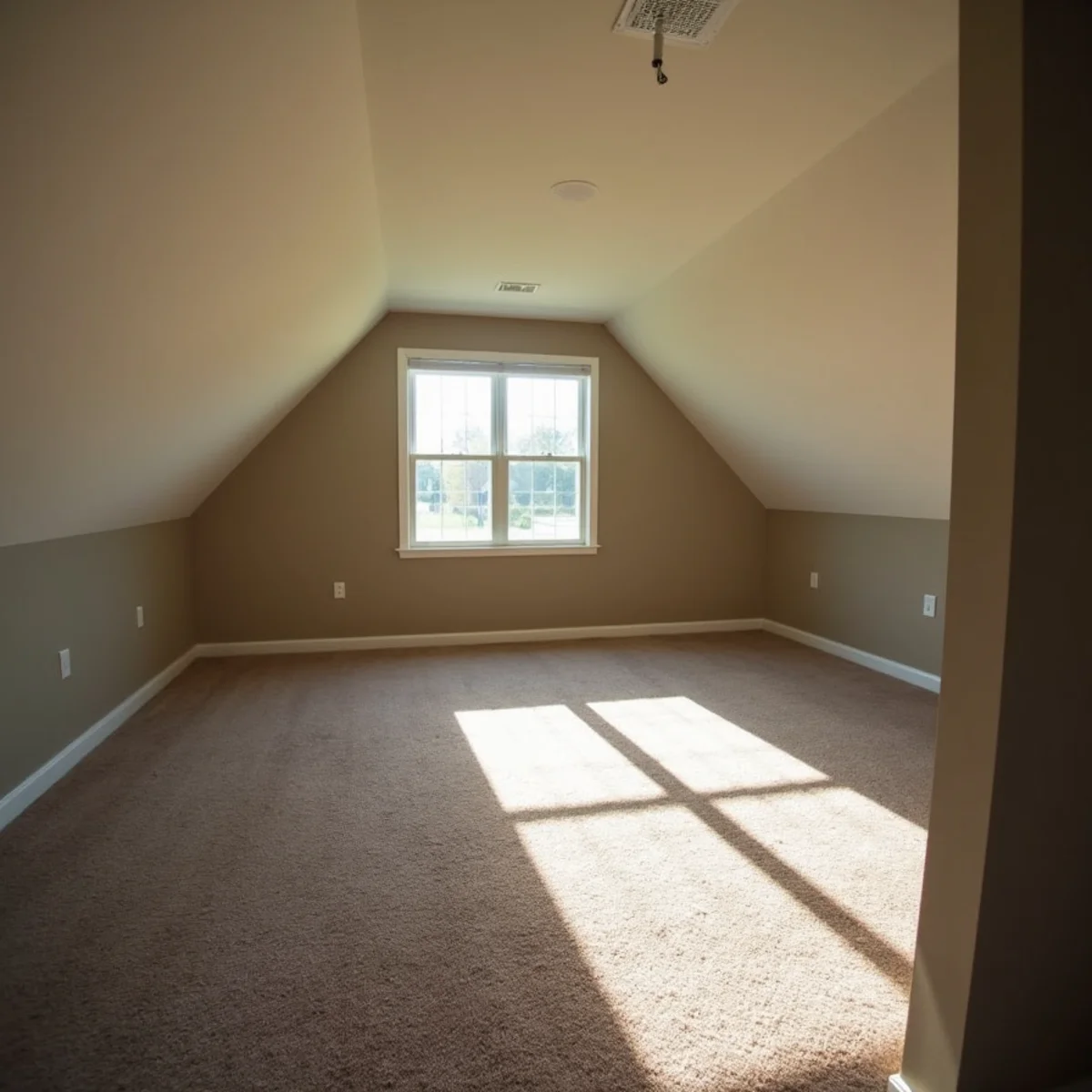
One system serving two floors, a bonus room over the garage and attic ducts in 130-degree heat leave the upstairs several degrees warmer than the thermostat downstairs. The fix is usually duct, return and balancing work, or a ductless head for the bonus room, not a bigger unit.
More on why the upstairs is hotter
Symptoms, safe first moves and what the technician checks
Use this to describe the problem on the phone, not as a diagnosis. Refrigerant, wiring and gas parts are for a licensed technician; your part is to observe and stay safe.
| What you notice | Your safe first move | What the technician checks |
|---|---|---|
| AC runs, air from the vents is warm | Thermostat on Cool and below room temp; filter; is the outdoor fan spinning? | Capacitor, contactor, condenser fan motor, refrigerant level, coil condition |
| Ice on the copper line or indoor coil | Switch the thermostat to Off (or Fan only) and let it thaw; do not chip ice | Airflow, blower, dirty filter or coil, low refrigerant from a leak |
| Water dripping from an upstairs ceiling or the attic air handler | Turn the system off; check whether the float switch has shut it down | Clogged condensate line, rusted or cracked drain pan, failed float switch |
| Heat pump blowing cool air in winter | Wait 10 minutes: a defrost cycle blows cool briefly. Check the outdoor unit for a solid block of ice | Defrost board and sensor, reversing valve, refrigerant charge, auxiliary heat strips |
| Gas furnace runs but blows cold air | Check the filter and that the thermostat says Heat; reset furnace power once | Igniter, flame sensor, gas valve, inducer and pressure switch, limit switch, condensate trap |
| Breaker trips when the system starts | Reset it once. If it trips again, leave it off | Shorted compressor or fan motor, failing capacitor, wiring at the disconnect or air handler |
| House reaches the setting but feels clammy or musty | Note how long the system runs and whether it short-cycles; set the fan to Auto, not On | Equipment sizing, coil condition, drainage, crawl space duct leaks pulling in damp air |
| Gas smell or CO alarm | Leave the house now. Call Piedmont Natural Gas or 911 from outside | Nothing until the gas utility or fire department clears the house |
After a Piedmont storm
Thunderstorms, ice and power surges: what to photograph before the technician arrives
Summer thunderstorms around Matthews bring lightning and the kind of flicker-and-return power that takes out capacitors, contactors and control boards. Winter brings the odd ice storm, with limbs on outdoor units and outages that leave a heat pump unable to restart. When a system quits after a storm, the useful first moves are photos and a safe shutdown, then a technician checking the disconnect and the electrical parts instead of guessing from the thermostat.
Take these photos first, if it is safe
- The outdoor unit from several angles, wide and close (a crushed top grille, bent fins, a limb on the unit)
- The thermostat display, its mode and any error code
- The electrical panel and breaker positions, from a safe distance, without opening anything
- The model and serial plate on the outdoor unit
- Fallen branches, ice buildup or standing water around the unit
- The date and rough time of the storm, ice event or outage
If a breaker keeps tripping, stop resetting it. After a suspected surge, turn the system off at the thermostat and, if you can do it safely, pull the outdoor disconnect. Do not open panels or touch wiring.
How the contractor supports an insurance claim
- 1Make the area safe and photograph it before anything is moved or cleaned up.
- 2Call and describe the storm, ice or surge timeline; the technician checks the disconnect, capacitor, contactor, control boards, fan and coil.
- 3Get written findings with photos, the repair options and the price for each.
- 4Share the report with your insurer or adjuster and ask what else they need.
- 5Confirm approval, your deductible, any permit and payment timing before work begins.
The contractor documents what it observed: equipment condition, test results, the repair scope and the price. Your insurer and your policy decide coverage, and nobody should promise you that a repair or a new system will be covered. For a system that will not start right now, see 24/7 emergency HVAC repair.
How it works
Call, dispatch, price, job done
You call, any hour
A person answers, asks what the system is doing and walks you through the safe checks while you are on the phone.
We dispatch
The nearest available licensed HVAC technician who works on your kind of equipment is sent to your address. You hear the expected timing on the call, not a promise we cannot keep.
Diagnosis and price
The technician tests the system, shows you what failed and gives you the price in writing before any repair starts.
Fixed and tested
The approved repair is made, then the system is run and checked: temperature split, amp draw, drainage, defrost and safety controls.
What the technician checks during the diagnosis
A symptom is not a diagnosis. The exact tests depend on the equipment, but a proper Matthews service call works through the system and the house in order before anyone quotes a part:
- The symptom, when it started, the system age, recent repairs and any storm or power outage
- The thermostat call: is it actually asking for cooling or heat, and in which mode?
- Power at the breaker, the outdoor disconnect and the air handler or furnace switch
- Airflow, the filter and the temperature split across the indoor coil
- The condensate path: drain line, pan, trap and float switch
- Electrical parts tied to the symptom (capacitor, contactor, motors, control or defrost board) and refrigerant readings where they apply
- When comfort is the complaint: duct leaks, crawl space and attic conditions, and the rooms that stay hot or damp
You should hear what failed in plain English, see the reading or the part when it helps, and get the price before approving anything. Ask up front whether a diagnostic or after-hours charge applies, and whether it is credited toward the repair you approve. A good visit ends with a decision, not a mystery: you know what failed, what the repair includes, what is still uncertain, and what would change the recommendation.
Straight answers
Repair, replace, and who is doing the work
When a repair makes sense
- The failure is one identified part and the rest of the system tests well
- The system uses R-410A and has no leak history
- The house stayed comfortable and dry until this week
- The repair is small next to the value of a system with years left
When replacement deserves a look
- An R-22 system with a refrigerant leak
- A failed compressor or evaporator coil on a system past 12 to 15 years
- A heat pump that leans on auxiliary heat all winter, or repeat repairs and climbing bills
- Sizing that was a guess: a new system should start with a Manual J load calculation
Credentials you can check
In North Carolina, heating and air conditioning contractors are licensed statewide by the North Carolina State Board of Examiners of Plumbing, Heating and Fire Sprinkler Contractors, and the technicians who come to your house work under that license. Refrigerant work also requires EPA Section 608 certification.
Most residential HVAC work falls under the H-3 heating classification. Ask for proof of liability insurance in writing, and workers' compensation coverage where it applies.
Every HVAC technician we send is licensed and insured in North Carolina. Ask the technician for the contractor's license number and look it up on the board's license lookup at nclicensing.org before you sign anything.
What a replacement estimate should list
- A Manual J load calculation for your house, not the size of the old unit
- How Manual S guided the equipment choice, and whether Manual D duct changes are needed for hot or cold rooms
- Equipment, labor, removal and refrigerant recovery as separate lines
- The refrigerant the new system uses (R-454B or R-32), start-up testing, the permit and any duct work
- Commissioning results in writing: airflow, refrigerant charge, drainage and thermostat setup
- Manufacturer and workmanship warranty terms, payment milestones and how approved change orders are handled
When nothing is unsafe, get at least two written quotes and compare them line by line. More on HVAC installation and replacement.
Permits depend on the address
Matthews sits in Mecklenburg County, where Mecklenburg County Code Enforcement issues mechanical permits, and replacing a heat pump, furnace or air conditioner needs a permit and an inspection. A Matthews mailing address in the 28104 ZIP can be in Union County instead, where Union County or the town issues the permit. North Carolina lets some small residential projects skip a building permit, but that exemption does not cover adding or replacing heating and air conditioning equipment.
The licensed contractor confirms the jurisdiction, pulls any permit and schedules the inspection. Ask who is responsible for the permit and its fee, and ask for the permit number when one is required. A repair visit usually does not need one.
Warranties and financing: get it in writing
Two different promises come with a new system. The manufacturer warranty covers eligible equipment parts under its terms, often only if the unit is registered. The workmanship warranty comes from the contractor and covers the installation or repair itself. Ask for both in writing, with their length, exclusions and who to call first.
If a contractor offers financing, approval comes from the lender, not the contractor. Before signing, confirm the lender, the term and rate, what happens after any promotional period, and whether a deposit is due. Ask whether Duke Energy or Piedmont Natural Gas rebates apply and who files them. Keep the invoice, model and serial numbers and start-up report together, and ask who to call, and how fast, if the drainage, airflow or comfort is not right after the install.
Cost, in plain terms
What changes the price of HVAC work in Matthews
Nobody can honestly price your repair or your new system from a web page, and a number quoted before anyone has looked usually grows in the driveway. What we can do is show you what moves the price, so the written quote you get from the technician makes sense line by line.
What moves a repair or replacement price
- The part that failed: a capacitor or a clogged drain sits at the low end, a compressor or coil at the high end
- The refrigerant: R-22 is scarce, R-410A supply is stepping down, new systems use R-454B or R-32
- Access: an attic air handler in August or ducts in a tight crawl space take longer
- Equipment type, capacity from a Manual J load calculation, and the SEER2 or HSPF2 tier
- Duct, electrical, drainage or gas changes the job needs to work properly
- Permit, inspection, removal, disposal, start-up testing and cleanup
- Timing: any night, weekend or holiday rate is stated before dispatch
Questions to ask about fees before dispatch
- Is there a diagnostic or service-call charge, and is it credited toward a repair I approve?
- Does an after-hours, weekend or holiday rate apply at this hour?
- Are parts, refrigerant and any follow-up visit priced separately?
- If I decline the repair, what do I owe?
You get those answers on the phone, before anyone drives out, and the repair price in writing before any work starts.
Financing and rebates: get the terms first
- Who the lender is, the term, the rate, and whether interest is deferred and then charged back
- The total repaid, not just the monthly payment
- Which Duke Energy or Piedmont Natural Gas rebate applies, who files it, and whether the quote shows the price before or after it
- What happens to the price if a rebate is denied
Rebate programs and federal tax credits change; check the utility's current rebate page and current IRS guidance rather than an old flyer.
Go deeper: what affects AC repair cost in Matthews and what drives the price of a new HVAC system around Charlotte.
Why call us
Why Matthews homeowners call Littleton Premier
A live answer at 2 a.m.
Air conditioners do not wait for office hours, and neither does a heat pump stuck on emergency heat in January. A person picks up 24/7 and starts dispatch on the call.
Licensed and insured technicians
Every HVAC technician we send is licensed and insured in North Carolina. You can check the contractor's license on the state board's lookup before anything is signed.
Price before work
The technician explains the problem in plain English and gives you the price in writing first. You approve the repair or you do not.
Written for Matthews houses
Two-story 1990s homes with attic air handlers, crawl spaces over red clay, heat pumps paired with gas furnaces: each fails in its own way, and the technician checks the likely parts first.
Repair first, replace when it makes sense
A capacitor is not a reason to sell you a new system. When replacement is the better call, you get the reasons and the options in writing.
Straight about timing
In a heat wave or after an ice storm every contractor around Charlotte is booked. We tell you the honest wait instead of a number that sounds good.
About Littleton Premier
One local number for heating and air
Littleton Premier Heating & Air is a 24/7 answering and dispatch line for heating and air conditioning, based around Matthews and serving eastern Mecklenburg and western Union County. Littleton Premier Heating & Air connects you with independent licensed HVAC contractors who perform the work. Our job is to get the right technician to your door and make sure you understand what they find before you pay for anything.
We are honest about what we are: no invented review counts, no borrowed certifications, no arrival time we cannot keep. A phone that gets answered, a contractor who diagnoses before quoting, and a price you hear first.
Areas we serve
Matthews and the towns around it
Next door to Stallings and Mint Hill, out US-74 to Indian Trail and Monroe, and down Providence Road to Weddington and Waxhaw. See every HVAC service area.
Inside Matthews and the smaller communities nearby
In Matthews itself we cover both ZIP codes, 28105 on the Mecklenburg side and 28104 toward Union County: the older homes around the historic downtown and Stumptown Park, subdivisions such as Sardis Plantation, Brightmoor, Matthews Plantation, Providence Hills and Hampton Green, the townhomes near Independence Boulevard and I-485, and the streets around Squirrel Lake Park and the Four Mile Creek Greenway. Beyond the town pages, we also serve Wesley Chapel, Marvin, Lake Park and Hemby Bridge, which share the same roads, the same summer humidity and the same winter cold snaps. Call to confirm your address before scheduling.
What to expect on dispatch
- We confirm your address before talking about arrival.
- You hear the expected timing on the call; a town on a list is not a response time.
- During a heat wave or a hard freeze, every contractor is stretched, and we say so.
- Not sure you are in range? Call and we will tell you honestly.
Maintenance
A Piedmont HVAC calendar that prevents the 3 a.m. call
March and April
Pine pollen season: change the filter, gently rinse the yellow film off the outdoor coil with the power off, and book the cooling tune-up before the first humid week.
June to August
Keep the condensate line clear and watch for water in the attic drain pan. Set the fan to Auto so the coil can drain and the house stays drier.
After a storm
Look at the outdoor unit for limbs, bent fins or a crushed grille, and photograph the damage before anything is cleaned up.
October and November
Heating check before the first freeze: heat pump defrost and auxiliary heat, igniter, flame sensor, heat exchanger inspection, and a fresh battery in every CO alarm.
Step-by-step: the spring and fall HVAC maintenance checklist for North Carolina homes, why a heat pump blows cold air in winter and crawl space humidity and your ductwork.
Placeholder · reviews coming soon
What Matthews homeowners say
This line is new to Matthews, and we won't publish a star rating or a testimonial we can't back up. As homeowners in Matthews, Stallings, Mint Hill, Indian Trail and the rest of the area share how their calls went, their verified reviews will appear here with a link to the source.
Until then: Every HVAC technician we send is licensed and insured in North Carolina. You hear the price before any work starts.
HVAC questions from Matthews homeowners
Do you really answer 24 hours a day in Matthews?
Are the HVAC technicians you send licensed and insured?
Will I know the price before any work starts?
My Matthews home was built in the 1990s. Is the HVAC system due for replacement?
Why does my house feel damp even when the AC is running?
Does an HVAC replacement in Matthews need a permit?
Why is one room hot when the AC is running?
What should a written HVAC estimate include?
What refrigerant will a new HVAC system in Matthews use?
Can I get a second opinion on an HVAC repair or replacement quote?
What is a Manual J load calculation and why does it matter?
When should I schedule HVAC maintenance in the Charlotte area?
Maintained by the Littleton Premier Heating & Air team · last reviewed October 2026. Every HVAC technician we send is licensed and insured in North Carolina. Littleton Premier Heating & Air connects you with independent licensed HVAC contractors who perform the work.
Guides
Before you call, or while you wait
Maintenance
Spring and Fall HVAC Maintenance Checklist for North Carolina Homes
Two short sessions a year, one after the pine pollen and one before the first freeze, prevent a large share of summer and winter breakdowns. Here is the checklist and what to leave to a technician.
Comfort and Ductwork
Why Is My Upstairs So Hot? Fixes for Two-Story Homes in Union County
A hot second floor is the most common comfort complaint in Union County two-story homes. Here is why it happens, what you can check yourself and which fixes actually work.
Cost Guides
New HVAC System Cost in the Charlotte Area: What Drives the Price and Which Rebates to Ask About
Two quotes for the same house can look nothing alike. Here is what actually sets the price of a new system around Charlotte, and the rebate, tax credit and financing questions to ask before you sign.
Get help now
Call the 24/7 heating and air line for Matthews
For anything urgent (no cooling in a July heat wave, no heat on a freezing night, water coming through an upstairs ceiling under the attic air handler), calling is faster than a form. A person answers at (321) 478-0693.
Have this ready when you call
- 1The service address and the best number to reach you
- 2What the system is doing: no cooling, no heat, ice, water, noise or a tripped breaker
- 3Heat pump, gas furnace or dual fuel, if you know
- 4The age of the system or the model plate on the outdoor unit, if it is easy to see
- 5Photos of the thermostat, any error code, and any water or ice, if you took them
Second opinions and replacement assessments
Not an emergency? Already holding a quote that says your system has to go? Ask for a second opinion or a replacement assessment. The technician tests the equipment and the house together (ducts, crawl space or attic, the rooms that stay hot or damp), measures for a load calculation if replacement is on the table, and leaves the options in writing. The usual path is simple: fix what is failing now, document what the house needs, and decide on replacement when you are ready, not in the driveway.
Not urgent? Send a request
For the fastest help, call (321) 478-0693. Or send a few details and we'll reach out.