
By the Littleton Premier Heating & Air team · Updated
Ductwork repair in Matthews, NC fixes the hidden half of your heating and cooling system: the supply and return ducts in the crawl space and attic. If upstairs rooms stay hot, the house smells musty, or bills keep rising while the equipment seems fine, call (321) 478-0693 and we send a licensed HVAC contractor to inspect, measure and price the fix before any work starts.
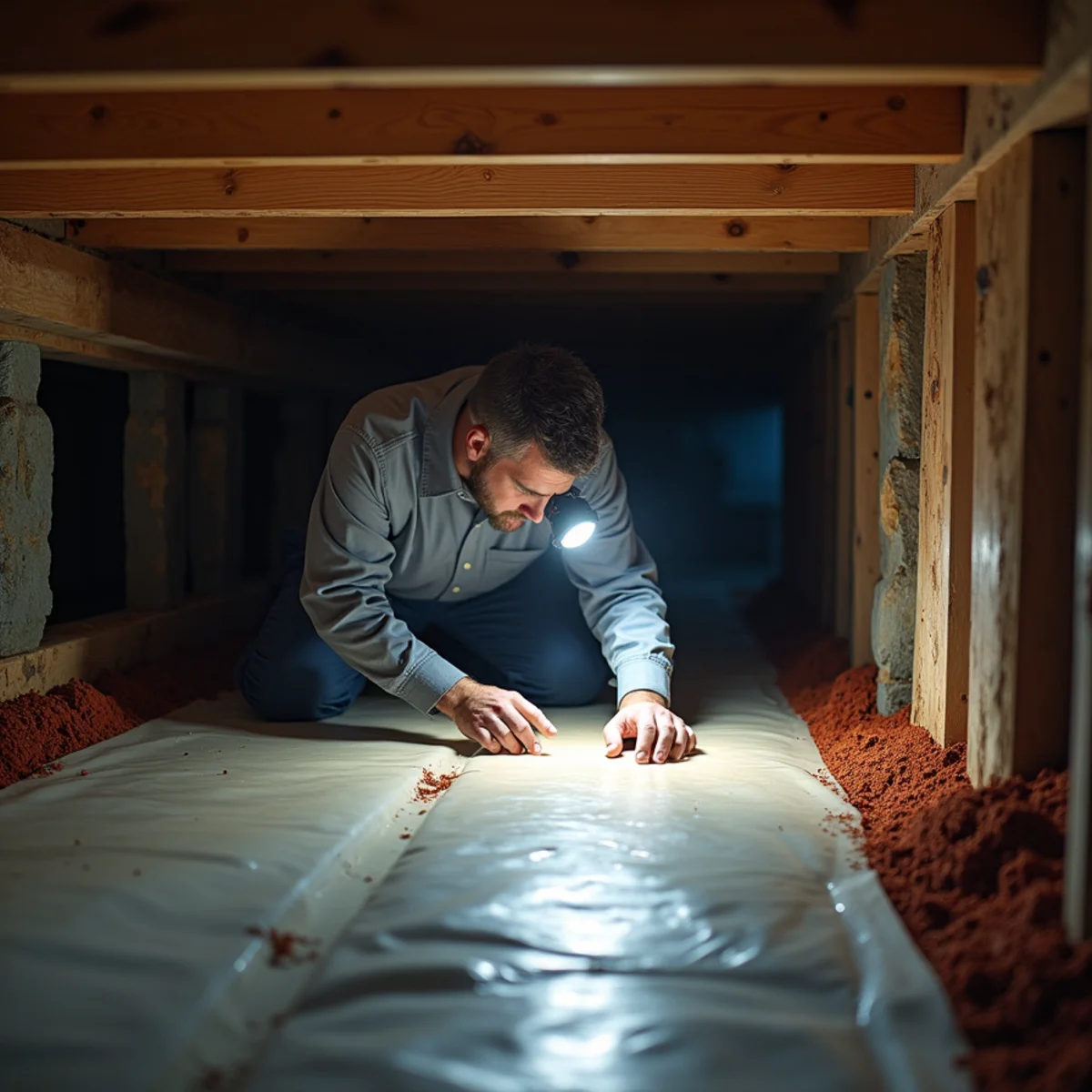
Matthews homes are hard on ducts from two directions. Crawl spaces over red clay stay damp most of the year, so metal ducts rust, insulation sags and runs pull loose. Up top, attic ducts feeding the second floor sit in summer air far hotter than the rooms they serve. Humidity ties it together: leaky ducts draw damp crawl space or attic air into the house, and the air conditioner has to work harder to wring it out.
Signs of leaking or failing ductwork
- Upstairs several degrees warmer than downstairs all summer, or a bonus room that never cools.
- A musty or earthy smell when the system starts, often from return leaks in the crawl space.
- Weak airflow at some registers while others blow hard.
- Dust that comes back within days of cleaning, and filters that load up fast.
- Sweating ducts or water stains on ceilings below attic runs, or puddles under ducts in the crawl space.
- Indoor humidity above about 60 percent in summer even with the AC running.
- Bills rising with no change in thermostat settings.
Some of these overlap with equipment faults. A weak capacitor or low refrigerant charge can also leave rooms warm, which is why the inspection checks the equipment and the ducts together. If the system has stopped cooling entirely, start with AC repair instead.
Crawl space ducts in Matthews: red clay, damp air and rusted or sagging runs
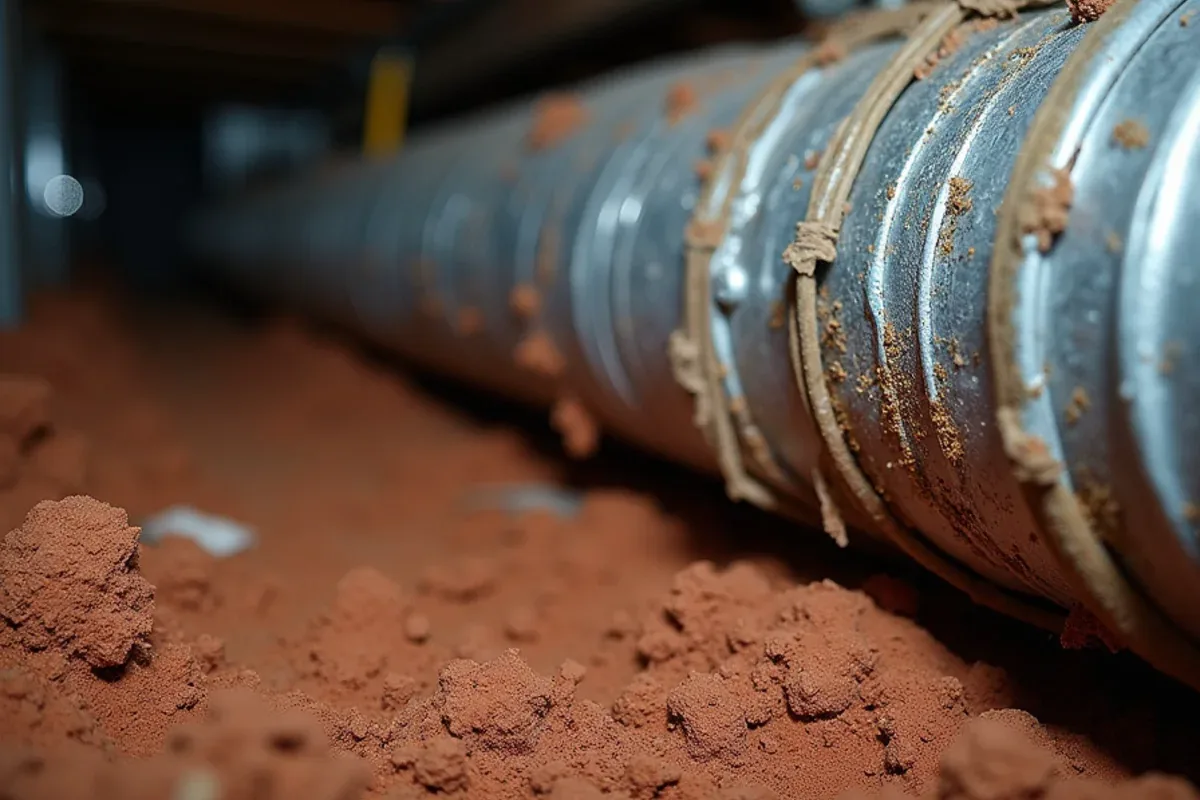
The red clay under most Matthews lots holds water. After a summer storm or a wet spring week it stays damp for days, and a vented crawl space draws in outdoor air that is close to saturated from June through September. Ducts down there live in that air year-round. When cold supply air runs through a metal trunk line or thinly insulated flex duct, the outer surface drops below the dew point and the duct sweats.
Over 20 or 30 years, that produces predictable damage:
- Rusted metal trunk lines and boots, sometimes with holes along the bottom seam where water collects.
- Wet, compressed insulation that has slipped off the duct and no longer insulates anything.
- Flex duct sagging onto the clay after straps rot or slip, kinking the run and choking airflow.
- Disconnected joints and boots that dump conditioned air under the house and let the returns pull crawl space air back in.
- Mold growth on duct jackets, joists and insulation in poorly ventilated corners.
Crawl space ductwork fixes range from re-hanging and sealing runs to replacing a rusted trunk. Moisture control for the crawl space itself (vapor barrier, drainage, encapsulation) is a separate trade, but the contractor will tell you when new ducts will not hold up without it. Our article on crawl space humidity and ductwork in the Charlotte Piedmont explains how the two problems feed each other.
Stay out of a crawl space with standing water or damaged wiring. Wet clay, exposed electrical and low clearance are a bad combination. Look from the access door with a flashlight and leave the crawl to the technician.
Attic ducts and hot second floors in two-story homes
Most two-story Matthews homes from the 1990s and 2000s put the upstairs air handler, the upstairs duct runs, or both in the attic. On a July afternoon that attic runs far hotter than the outdoor air, and every foot of duct crossing it picks up heat before the air reaches a bedroom. Warm air also rises through the stairwell, so the second floor fights heat from the roof above and the house below.
Duct problems widen that gap:
- Long runs to bonus rooms over the garage, often undersized flex duct with several tight bends.
- Crushed or kinked flex where boxes were stored or someone walked across the attic.
- Missing or small upstairs returns, so supply air cannot circulate when bedroom doors are closed.
- Leaks at the plenum and boots, where the return side pulls attic air straight in.

Fixes include sealing and re-insulating runs, resizing the worst branches, adding a return or jumper duct, and setting dampers so the far rooms get their share. In some homes a separate upstairs system or a ductless head in the bonus room makes more sense, which our HVAC installation and replacement page covers. For a fuller list of causes, read why the upstairs is so hot in a two-story home.
Duct sealing, repair or full replacement: how to decide
The choice rests on how much of the system is damaged, how old it is, and whether new equipment is coming soon.
| What the inspection finds | Usual fix | Why |
|---|---|---|
| Leaks at joints, boots and the plenum; ducts otherwise sound | Seal with mastic and retest | The accessible joints recover the most air for the least work |
| A few sagging, kinked or disconnected runs | Repair and re-hang those sections | The rest of the system still has useful life |
| A rusted trunk or wet, collapsed insulation in the crawl space | Replace the damaged trunk and insulation | Patches on rusted metal do not last in damp air |
| Most runs brittle, crushed or undersized | Full duct replacement | Repairing run by run costs more and leaves airflow problems |
| New system planned and ducts 20 or more years old | Replace ducts with the equipment | One job, sized by Manual D for the new system |
Duct sealing uses mastic or UL 181 rated tape at every seam, collar and boot, never cloth duct tape, which dries out and lets go. A careful contractor measures before and after so you know the leakage actually dropped. A full duct replacement should be designed to Manual D, supported off the clay or across the joists, insulated to current code and leak-tested when it is done.
How duct leakage is measured, and what each sealing method can reach
ENERGY STAR estimates that a typical home loses 20 to 30 percent of the air moving through its ducts to leaks, holes and poorly connected runs. In a Matthews house that air ends up in a 130-degree attic or a damp crawl space, and leaky returns pull that same attic or crawl space air back into the system. Guessing at leaks wastes money; measuring them tells you where the work pays.
- Duct leakage test. A calibrated fan pressurizes the duct system with the registers sealed and reads how much air escapes. Testing leakage to the outside separates air lost to the attic or crawl space from air that leaks harmlessly inside the house.
- Pressure pan and smoke. With the house depressurized, readings at each register and a smoke pencil at the joints point to the runs and boots that leak most.
- Mastic and UL 181 tape seal every joint a technician can reach, which in most Matthews homes means the crawl space trunk, the attic boots and the air handler plenum.
- Aerosol sealing blows a sealant through the pressurized ducts from the inside and closes small gaps in runs hidden behind walls and ceilings. It does not fix crushed, disconnected or rusted-through ducts, so those get repaired first.
- Retest after the work. A before-and-after number is the proof the sealing worked.
Crawl space encapsulation and your ducts: who does what
Crawl space companies handle vapor barriers, sealed vents, drainage and encapsulation; the HVAC contractor handles the ducts, the air handler or furnace down there, and any dehumidifier tied to the system. Order matters: repair, seal and re-hang the ducts before a liner goes down, because working over a new liner is harder and a leaky duct inside a sealed crawl space still wastes energy. Our article on crawl space humidity and your ductwork explains how the two fit together.
Whole-home dehumidifiers: when the AC alone cannot control humidity
An air conditioner removes moisture only while it runs. Mild Matthews days in spring and fall often need little cooling but stay muggy, so the AC barely cycles and indoor humidity creeps up. A correctly sized system with tight ducts handles most of summer; a whole-home dehumidifier covers the gaps.
It connects to the duct system, pulls water out with its own coil and runs from a separate humidistat, so it dries the house without overcooling it. It is worth a look when:
- Indoor humidity stays above about 55 to 60 percent with the AC working normally.
- Floors feel sticky, windows fog on cool mornings, or closets smell musty.
- A newer high-efficiency system runs long at low speed but the house still feels damp in the shoulder seasons.
- Someone at home has allergies or asthma aggravated by dust mites and mold, which thrive in damp air.
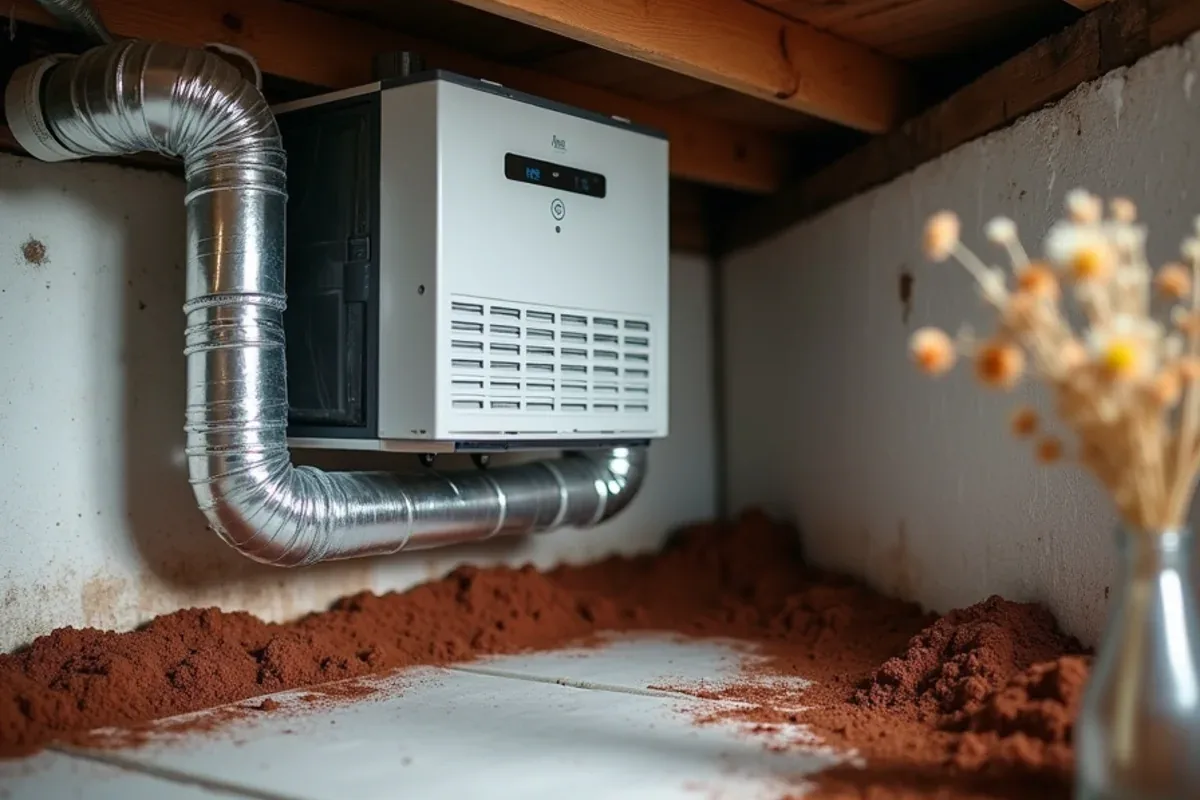
A dehumidifier is not a cure for oversized equipment or leaking crawl space returns. Fix those first, because a dehumidifier working against a return that keeps pulling in wet air will run without end. An inexpensive hygrometer from a hardware store shows where your house stands before you call.
Filtration and fresh air for Carolina pollen season
Every year from about late March into April, pine pollen coats Matthews driveways, decks and outdoor AC coils in yellow dust. Indoors it rides in through open doors and leaky returns and lands on the filter. A 1-inch filter that lasted three months in winter can clog in a few weeks during pollen season, and a clogged filter cuts airflow, raises static pressure and can freeze the evaporator coil.
Better air filtration usually means a media cabinet holding a 4- or 5-inch pleated filter, which traps finer particles with less restriction than a dense 1-inch filter. Options to talk through with the technician:
- A media filter cabinet at the air handler, typically MERV 8 to 13, sized so the blower is not starved for air.
- Sealed returns, so air passes through the filter instead of around it from the crawl space or attic.
- Controlled fresh air for tighter newer homes, often through an energy recovery ventilator, so outdoor air comes in filtered rather than through random leaks.
- Rinsing the outdoor coil after pollen season, with the power off at the disconnect, to restore airflow.
Good indoor air quality in this climate is mostly about humidity, filtration and tight returns working together. Our spring and fall HVAC maintenance checklist for North Carolina lists what to do each season.
What a duct inspection covers
A duct inspection is a set of measurements and a physical look at the system. Expect these steps:
- 1Your description. Which rooms run hot or cold, when the smell shows up, and what indoor humidity has been doing.
- 2Equipment check. Filter, blower, coil and refrigerant readings, so an equipment fault is not mistaken for a duct problem.
- 3Static pressure readings across the blower and filter to show whether the ducts are restricting airflow.
- 4Crawl space inspection of trunks, boots, insulation, hangers and moisture, with photos.
- 5Attic inspection of supply runs, the upstairs plenum and returns, with photos.
- 6Room-by-room readings of supply temperature and airflow, plus a duct leakage test with a calibrated fan when sealing is on the table.
- 7Written findings and a price for each recommended repair, so you can decide what to do now and what can wait.
Every HVAC technician we send is licensed and insured in North Carolina. In the hottest months, attic work is usually booked for the morning, before the attic becomes unsafe to work in.
What a ductwork and humidity visit includes
- A room-by-room review of hot spots, smells and humidity
- Static pressure readings across the blower and filter
- Crawl space and attic duct inspection with photos
- An indoor humidity reading and a check of the coil and condensate drain
- Duct leakage testing when sealing is recommended
- Sagging runs re-hung and joints sealed with mastic or UL 181 rated tape
- Filter sizing and dehumidifier options explained
- A written price for each repair before work starts
Why choose Littleton Premier Heating & Air for ductwork repair and humidity control
Answered 24/7
A person answers (321) 478-0693 at any hour, and duct inspections can be booked for cooler morning hours.
Licensed and insured
Every HVAC technician we send is licensed and insured in North Carolina.
Photos and a price first
You see what the technician found under the house and in the attic, and approve the price before anything is cut.
Built around Piedmont humidity
Red clay crawl spaces, hot attics and pine pollen season shape every recommendation.
What affects ductwork and dehumidifier cost
Duct and humidity work is priced after the inspection, and you approve the written price before any work starts. Sealing a handful of accessible joints sits at the small end; replacing every run in both a crawl space and an attic sits at the large end. What moves the number:
- How many runs, boots and fittings are damaged, and where they are
- Sealing and repair versus a full replacement designed to Manual D
- Crawl space clearance and moisture, and attic heat and access
- Rusted metal trunk lines that have to be replaced rather than patched
- Leakage testing and static pressure readings before and after
- Added returns or jumper ducts, which can mean drywall cuts
- Dehumidifier capacity, ducting, condensate drain and electrical connection
- Filter cabinet upgrades and fresh-air ventilation equipment
We don't publish prices we can't stand behind: you hear the price for your system, from the technician who diagnosed it, before any work starts.
Ductwork Repair and Humidity Control around Matthews, NC
Crawl space duct trouble turns up most in older homes on damp lots, from 1970s and 1980s ranches in Mint Hill to the earliest Matthews subdivisions, while hot second floors are the usual complaint in the two-story neighborhoods across the Union County line. We take duct and humidity calls across our HVAC service areas near Matthews, including crawl space ductwork in Mint Hill, hot upstairs rooms in Stallings and two-story homes in Indian Trail.