
By the Littleton Premier Heating & Air team · Updated
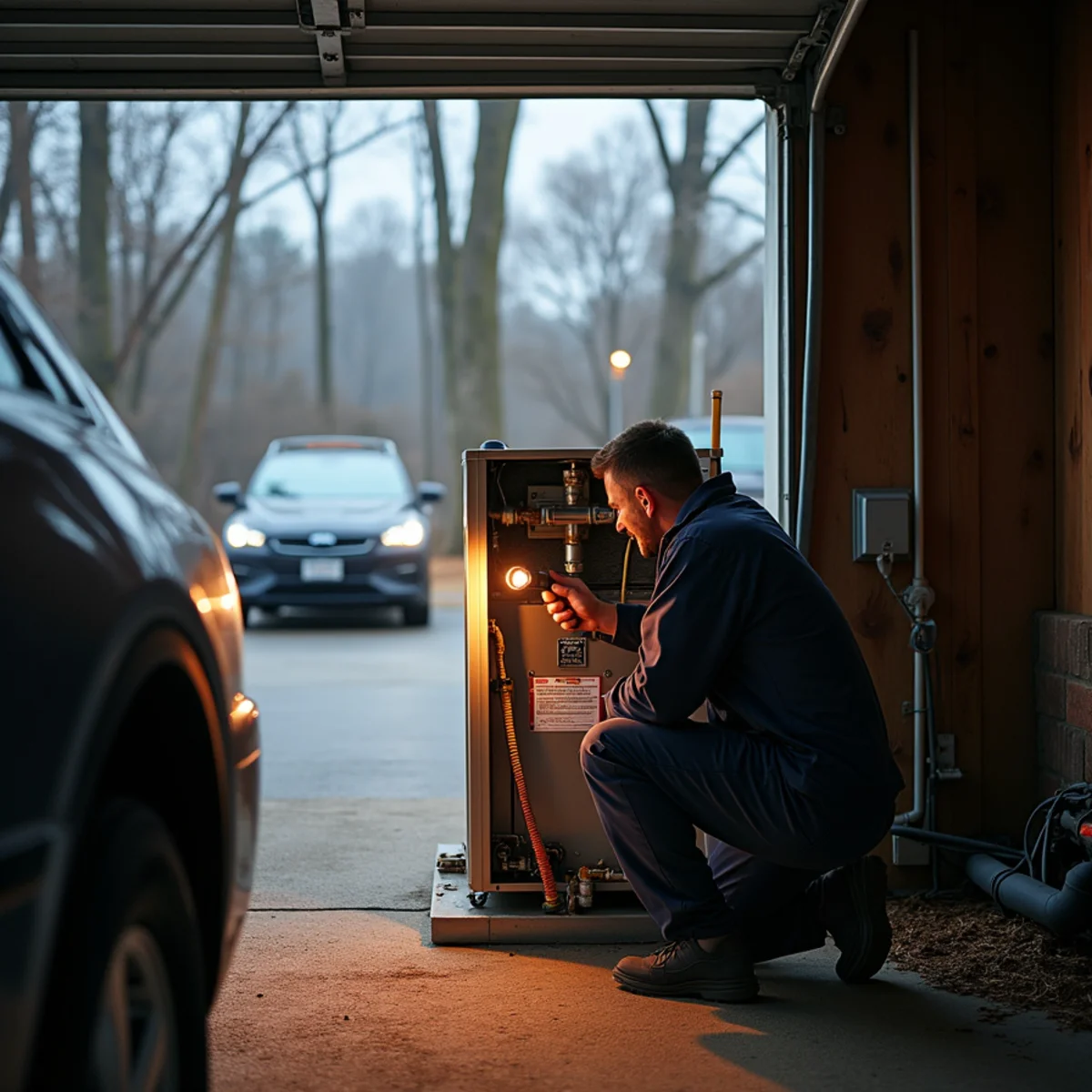
Furnace and heating repair in Matthews, NC begins with a person answering your call at any hour. Call (321) 478-0693, tell us what the furnace is doing, and we dispatch the nearest available licensed HVAC technician to find the fault, confirm the system is safe to run and give you a written price before any repair. Igniters, flame sensors, inducer and blower motors, pressure switches and control boards cause most no-heat calls here.
Matthews winters look mild on paper, but nights at or below freezing come every year, and the first cold snap of November exposes every weak part that sat idle all summer. Larger homes here often heat with a gas furnace on Piedmont Natural Gas, sometimes paired with a heat pump as a dual-fuel system, while many others rely on a heat pump with electric backup. If the burners will not light, our guide to a furnace not igniting on the first cold night covers the safe checks.
Signs your furnace needs repair now
Some furnace problems can wait for a weekday appointment. Others mean the system should be off right now. This table sorts the common ones by urgency.
| What you notice | How urgent | What to do now |
|---|---|---|
| No heat, and the house is sliding toward the 50s on a freezing night | Same night | Check thermostat, filter, breaker and furnace switch, then call |
| Furnace clicks, tries to light, then locks out | Soon | Note the blinking code on the control board, then call |
| Burners light, then shut off within seconds, again and again | Soon | Change a dirty filter; if it continues, call |
| Loud bang or boom when the burners light | Turn it off now | Switch the thermostat off and call; do not let it keep cycling |
| Yellow, lazy or lifting burner flames | Turn it off now | Leave it off and ask for a combustion check |
| Rotten-egg smell or a carbon monoxide alarm | Emergency | Leave the house first, then call Piedmont Natural Gas and 911 from outside |
| Dusty burning smell on the first cold morning | Usually normal | Should fade during the first hour of running; if it smells like hot plastic or lingers, turn it off and call |
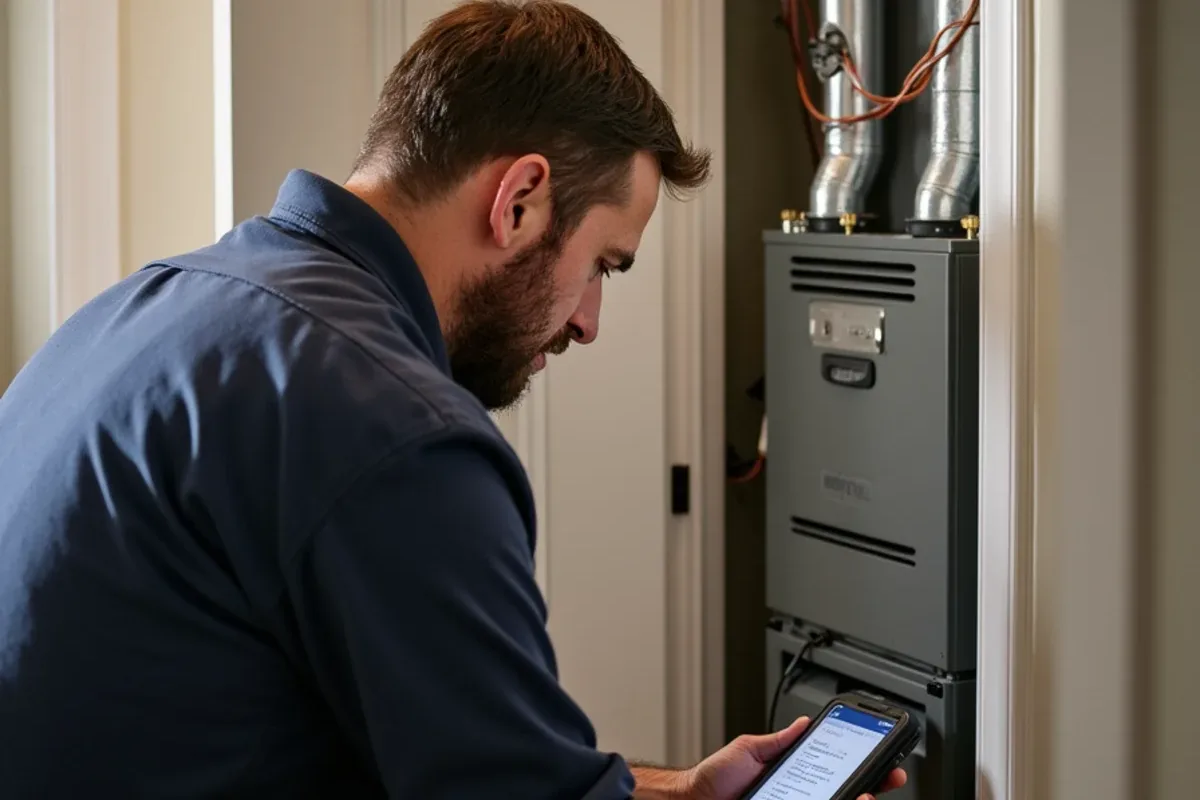
Before calling about no heat, make sure the thermostat is on Heat with the setpoint above room temperature, the batteries are fresh, the filter is not packed with dust, and the light-switch-style service switch on or near the furnace is on. Those four checks clear more calls than you might think.
Gas furnace problems we fix: igniters, flame sensors, blower motors and control boards
A modern gas furnace lights in a fixed sequence, and each step has to prove itself before the next one starts. When any step fails, the control board stops and usually flashes a code. That is why diagnosis starts with the code and the sequence, not with swapping parts.
- Inducer motor starts first to purge the heat exchanger and draft the flue. Worn bearings make it squeal or hum, and a slow inducer never proves draft.
- Pressure switch confirms the inducer is moving air. A cracked hose, a blocked vent or a water-filled trap on a high-efficiency furnace keeps it open.
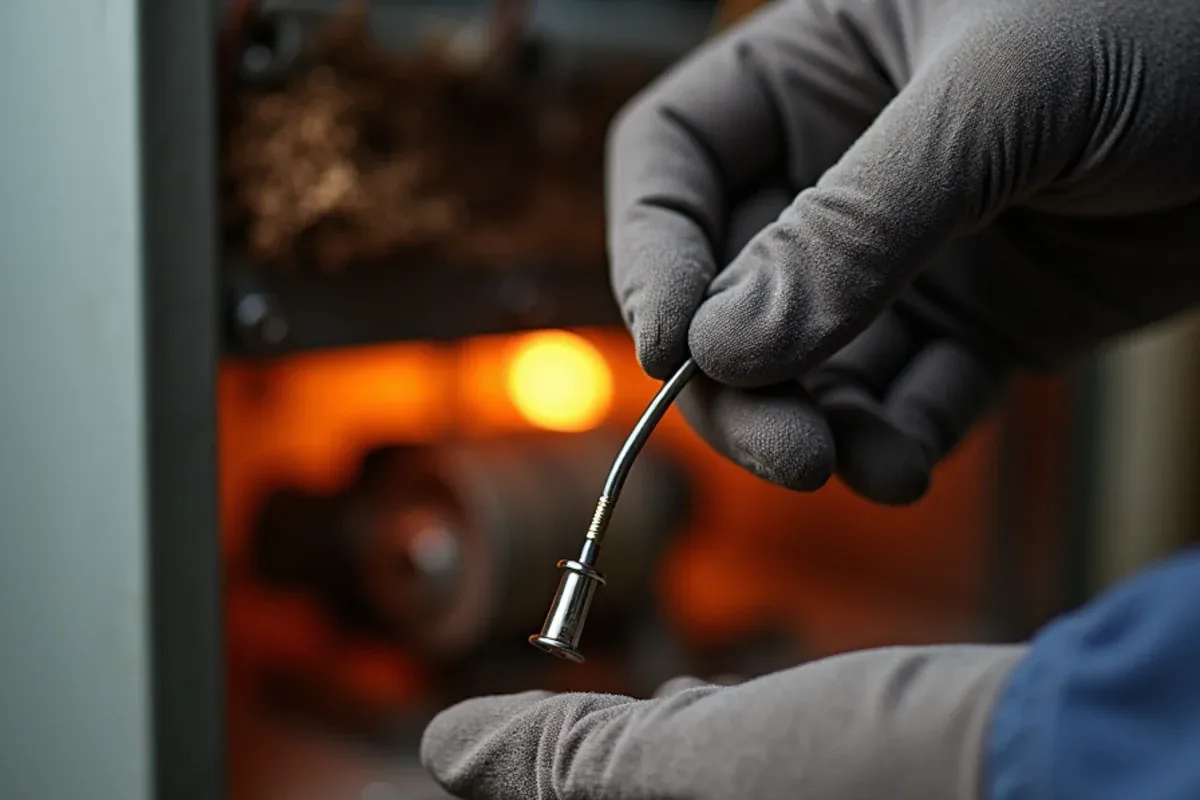
- Hot surface igniter glows to light the gas. These ceramic parts crack with age, and a furnace that clicks through its tries without ever lighting often needs one. Igniter replacement is a routine winter repair.
- Gas valve opens once the igniter is hot. Valve failures are less common, and they are tested, never guessed.
- Flame sensor proves the burners actually lit. A thin coat of oxidation on the rod makes the board shut the gas off within seconds, so flame sensor cleaning or replacement is one of the most frequent fixes in the first cold week.
- Blower motor moves heated air through the ducts. Bearings wear, capacitors weaken on older motors, and variable-speed motor modules can fail after a power surge.
- Control board runs the whole sequence. Age, heat and surges from ice storms and summer lightning damage its relays.
The fault code chart is printed inside the furnace door. Take a photo of the blinking light before you cut power, since a power reset usually clears it.
Furnace blowing cold air or short cycling: the usual causes
Cold air from the registers while the thermostat calls for heat has a short list of causes, and the pattern tells the technician where to start.
| Pattern | Usual cause | Safe check for you |
|---|---|---|
| Blower runs, burners never light | Cracked igniter, gas supply off, failed inducer or pressure switch | Thermostat on Heat, not Fan On; other gas appliances working? |
| Burners light, then go out in a few seconds | Dirty flame sensor, poor ground, weak flame | Nothing beyond the filter; call |
| Runs a few minutes, shuts off, repeats | High-limit switch tripping from a clogged filter or closed registers | Change the filter; open supply registers |
| Warm air at first, then cool air between cycles | Thermostat fan set to On instead of Auto | Set the fan to Auto |
| Heat pump home, air feels cool | Heat pump defrost or low charge, not a furnace fault | See the heat pump page |
Short cycling matters because the furnace is protecting itself. A limit switch that keeps tripping means the heat exchanger is running too hot, usually from restricted airflow: a packed filter, a weak blower, crushed flex duct in the attic or closed vents in unused rooms. Left alone, that heat stress is one of the things that cracks heat exchangers. A rollout switch trip is more serious, because it means flame is escaping the burner area, and it should never be reset by the homeowner.
On a dual-fuel or heat pump system, lukewarm air in winter is often normal heat pump behavior. Heat pump repair and replacement explains the difference between a defrost cycle and a real fault.
Gas smell or a carbon monoxide alarm: what to do first
Smell gas or hear a CO alarm? Leave the house first. Get everyone, including pets, outside. Do not flip light switches, touch the thermostat, start a car in an attached garage or try to find the leak. Once you are outside and away from the house, call Piedmont Natural Gas (or your gas supplier) and 911. Call us only after the utility or the fire department has made the home safe.
Natural gas carries an added odorant that smells like rotten eggs or sulfur so leaks get noticed. Carbon monoxide has no smell at all, which is why every home with a gas furnace, gas water heater, gas range or attached garage needs working CO alarms outside the sleeping areas and on every level.
Signs that point to carbon monoxide include headaches, dizziness or nausea that ease when you leave the house, several people or pets feeling ill at once, soot around the furnace or water heater, and heavy condensation on windows near gas appliances. Treat any of those like an alarm: get outside, then call 911.
Once the home is cleared, a utility or fire department responder may leave an appliance shut off until it is repaired. That is where a licensed HVAC technician comes in: finding the leaking fitting, the blocked flue or the failed part, repairing it and confirming safe combustion before the furnace runs again. For no-heat calls that are not a safety emergency, 24/7 emergency HVAC repair is answered by a person at any hour.
Cracked heat exchangers and when a furnace is no longer safe to run
The heat exchanger is the metal chamber that keeps burner flames and exhaust gases separate from the air your blower sends through the house. Every heating cycle makes the metal expand and contract, and a furnace that has overheated for several winters because of poor airflow wears faster. Eventually a seam can split or the metal can crack.
This is a call the technician makes, not the homeowner. Cracks are often deep inside the cabinet, and you cannot judge one by peering through the burner opening. A technician confirms or rules one out with evidence:
- A camera inspection inside the heat exchanger passages
- Watching the burner flames as the blower starts, since a flame that shifts or rolls when the fan comes on is a warning sign
- A combustion analysis that measures carbon monoxide in the flue gas
- Checking the flue, draft and vent connections for blockages or separations
- Carbon monoxide readings in the air at the supply registers
If a crack is confirmed, the furnace is shut off and stays off. On an older furnace the heat exchanger is rarely worth replacing alone, so the conversation usually turns to replacement, and our guide to repairing or replacing an older HVAC system helps with that decision. Ask to see the photo or video, and a second opinion on a finding that large is reasonable. If the inspection comes back clean, you hear that plainly too: an old furnace is not automatically an unsafe one.
Furnaces in crawl spaces, attics and garages: what the location changes
Plenty of Matthews furnaces never sat in a hall closet. Builders in the 1990s and 2000s laid horizontal furnaces in the crawl space for the main floor and in the attic for the upstairs, or stood one in the garage. Where the furnace lives shapes how it fails and how long the repair takes.
- Crawl space furnaces sit in damp air over red clay. Burners rust, flame sensors corrode faster, and control boards and wiring are within reach of rodents. A rusted burner tray or a chewed wire is a common find on a first cold-night call.
- Attic furnaces bake all summer and freeze all winter. On a high-efficiency (90%+) furnace the condensate drains through PVC and often a small pump; when that line or pump freezes or clogs, the pressure switch stops the burners even though the furnace itself is fine.
- Garage furnaces have to be raised or protected per code because of fuel vapors and vehicles, and they share space with water heaters, storage and dust that load the burners and blower.
- Access matters. A safe path, a light and a clear platform around an attic or crawl space furnace make the visit faster and safer. If boxes or insulation block it, mention that when you call.
Noises worth reporting when you call
Clicking with no flame points to the igniter or the ignition sequence, which our guide to a furnace not igniting on the first cold night walks through. A squeal at startup is usually the inducer or blower motor bearings. A rumble after the burners shut off can mean a burner or gas valve that is not closing cleanly, and a bang at ignition means delayed ignition: turn the furnace off and call rather than let it keep cycling.
How Matthews homes are heated: gas furnaces, heat pumps and dual-fuel systems
Heating in Matthews splits between gas and electric. The building boom that produced most of the town between 1985 and 2005 put heat pumps in a large share of homes, while larger houses and many two-story homes run a gas furnace, sometimes as the backup half of a dual-fuel system.
| System | How it heats | Typical repair calls |
|---|---|---|
| Gas furnace with central AC | Burns natural gas from Piedmont Natural Gas; a separate outdoor AC handles summer | Igniters, flame sensors, inducers, pressure switches, control boards |
| Heat pump with electric backup | Moves heat from outdoor air; heat strips in the air handler cover defrost and the coldest hours | Defrost problems, reversing valves, heat strips, sequencers |
| Dual fuel: heat pump plus gas furnace | Heat pump on mild days; the furnace takes over below a set outdoor temperature | Both sets of parts, plus the controls that choose which one runs |
| Two systems in one house | One unit for upstairs, often in the attic, and one for the main floor in a crawl space or closet | One floor cold while the other is fine |
High-efficiency condensing furnaces, common in replacements from the 2000s on, vent through white PVC pipe and drain water much like an air conditioner. A clogged condensate trap or a frozen drain line can shut one down on the coldest night of the year. Older mid-efficiency furnaces vent through metal flue pipe, often sharing a chimney chase with the gas water heater.
A fall tune-up catches most of what fails in the first cold week; the HVAC maintenance checklist for North Carolina homes lists what it should cover. When repairs keep coming, HVAC installation and replacement explains how a new furnace or dual-fuel system is sized and permitted.
What a heating repair visit looks like
A heating repair visit runs in a set order, and safety checks come before anything else.
- 1Call any hour. A live person answers (321) 478-0693, asks about the symptom, any alarms or smells, and whether the house uses gas, a heat pump or both, then gives you honest timing.
- 2Safety first. The technician checks for gas leaks at the furnace, inspects the venting and flue, and measures CO before running the system.
- 3Diagnosis. Fault codes, the lighting sequence, flame signal, gas pressure, temperature rise, blower operation and filter condition.
- 4Written price. You hear what failed and get the price before any repair starts.
- 5Repair. Only the approved work is done, using parts matched to your furnace.
- 6Full heating cycles. The furnace runs through complete cycles while flame, temperature rise and safety controls are checked again.
Every HVAC technician we send is licensed and insured in North Carolina. Littleton Premier Heating & Air connects you with independent licensed HVAC contractors who perform the work.
What a heating repair visit includes
- A live answer and honest timing, even on the coldest night
- Gas leak, venting and carbon monoxide checks before the furnace runs
- Fault code and lighting sequence diagnosis
- A written price before any repair starts
- Photos or video of any heat exchanger concern
- Condensate trap and drain checked on high-efficiency furnaces
- Full heating cycles run after the repair
Why choose Littleton Premier Heating & Air for furnace and heating repair
Answered on freezing nights
(321) 478-0693 reaches a live person 24/7. When a cold snap knocks out heat across town, you get an honest place in line rather than a promise.
Licensed and insured in North Carolina
Every HVAC technician we send is licensed and insured in North Carolina. Most residential work falls under the H-3 classification, and any contractor can be checked on the board's license lookup at nclicensing.org.
No furnace condemned without evidence
A cracked heat exchanger call comes with a camera image or combustion readings, and every repair is priced in writing first.
Gas, heat pump and dual fuel
Matthews homes mix all three, sometimes in the same house, so the technician checks the whole heating system rather than one box.
What affects furnace repair cost
A furnace that will not light could need a cleaned flame sensor or a new control board, and nobody can tell which over the phone. The technician diagnoses first and puts the price in writing before any work. These are the things that move it.
- The failed part. Flame sensor cleaning and igniters sit at the low end; inducer motors, blower motors and control boards in the middle; a heat exchanger at the top.
- Furnace type. Condensing furnaces add traps, drain lines and PVC venting; dual-fuel systems add a heat pump and its controls.
- Where it is installed. A furnace in a cold attic or a tight crawl space takes longer to work on than one in a garage or hall closet.
- Parts availability. Common igniters and sensors ride on the truck; brand-specific boards and variable-speed motors may need ordering.
- Safety findings. Venting repairs, a gas leak at a fitting or a confirmed cracked heat exchanger change the scope.
- Age and condition. Rusted cabinets, brittle wiring and corroded burners on older furnaces can add work.
- Timing. Any night, weekend or holiday rate is stated on the call before dispatch.
We don't publish prices we can't stand behind: you hear the price for your system, from the technician who diagnosed it, before any work starts.
Furnace and Heating Repair around Matthews, NC
Heating calls in Matthews cluster in the 1990s two-story homes where a furnace in the attic, garage or crawl space has run since the house was built. The same dispatch covers furnace repair in Mint Hill, where many older ranch homes are on their second gas furnace, heating repair in Stallings just over the Union County line, and the dual-fuel homes behind most requests for furnace and heat pump service in Indian Trail. Every town is listed on our service areas page.