
Ductwork and Humidity
Crawl Space Humidity and Your Ductwork in the Charlotte Piedmont
By Littleton Premier Heating & AirUpdated 7 min read

The short answer
In a Piedmont summer, vented crawl space air often sits near saturation over damp red clay. Supply ducts carrying 55°F air run below its dew point, so they sweat, soak their insulation, rust and sag. The fix: seal, insulate and support the ducts, control the crawl space moisture, and sometimes add a dehumidifier.
Why Piedmont Crawl Spaces Stay Damp
Much of Matthews, Mint Hill and Monroe sits on the red clay of the Carolina Piedmont. Clay holds water, drains slowly after summer thunderstorms and releases moisture into the crawl space for days. Many homes built from the 1970s through the 2000s have vented crawl spaces, on the theory that outside air would dry them out. In a humid Piedmont summer it works the other way.
On a July afternoon the outdoor dew point often sits around 70°F. When that air drifts through the foundation vents into a crawl space that stays in the 60s and low 70s, its relative humidity climbs toward 100 percent. Wood framing absorbs it, condensation collects under the vapor barrier, and anything cold, ductwork included, starts to drip.
What Humidity Does to Ductwork
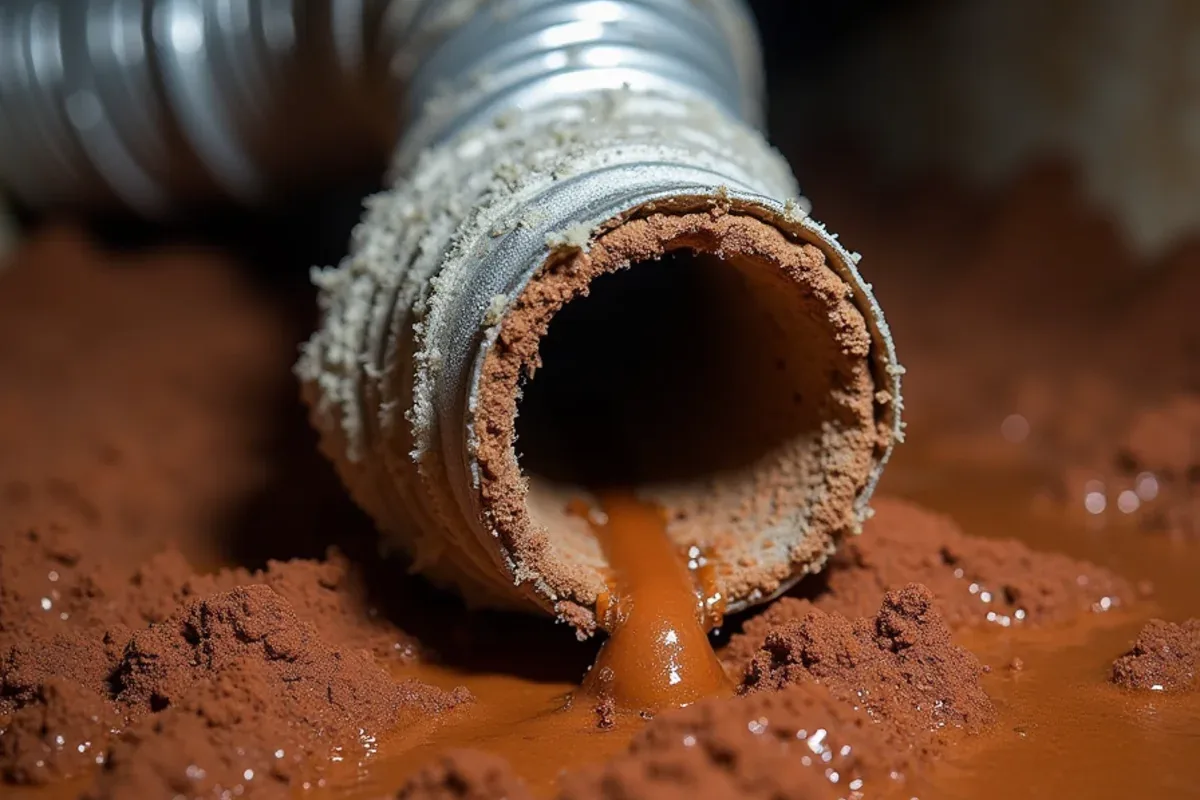
Supply ducts carry air from the air conditioner at roughly 55 to 60°F. When the surrounding air has a dew point higher than that, water condenses on any surface it touches. Wherever the duct insulation has gaps, torn vapor jackets or compressed spots, the duct sweats.
- Wet, sagging insulation. Fiberglass duct wrap absorbs water, grows heavy, slips off and falls to the clay.
- Rusted metal trunks and boots. Galvanized trunk lines and register boots corrode where water sits, and holes open up.
- Flex duct on the ground. Straps stretch or fail, the duct sags into the dirt, kinks and loses airflow.
- Disconnected joints. Old tape lets go, and conditioned air pours into the crawl space.
- Musty smell indoors. Leaky return ducts pull damp crawl space air, and its smell, straight into the system.
Each of these feeds the others. A leaking supply duct dumps cold air under the house and makes more surfaces cold enough to sweat. A leaking return pulls in moist air, adding humidity the air conditioner then has to remove.
Signs Your Crawl Space Ducts Have a Problem
You may not need to crawl under the house to spot trouble. Watch for:
- Rooms that cool poorly, especially those farthest from the air handler
- Indoor humidity that stays above about 55 percent in summer with the AC running
- A musty or earthy smell when the system starts
- Floors that feel cool and clammy, or hardwood cupping over the crawl space
- Higher Duke Energy bills with no change in thermostat settings
- Condensation or standing water you can see from the crawl space door
If you look, use a flashlight from the access door. Do not crawl into a space with standing water near wiring, signs of animals or a sewage smell. Leave the full inspection to a technician with the right gear.
Fixing the Ducts: Seal, Insulate, Support or Replace
| Condition found | Typical fix |
|---|---|
| Leaking joints on sound duct | Seal joints with mastic, re-hang and re-insulate |
| Wet or fallen insulation on sound metal | Let it dry, then replace insulation with a continuous vapor jacket |
| Flex duct sagging or lying on the ground | Re-support with proper straps and spacing; replace kinked or torn sections |
| Rusted trunk lines or boots with holes | Replace the damaged sections |
| Widespread rust, crushed runs or a poor layout | Replace the duct system, sized to Manual D |
Sealing and insulation fix the duct, but they do not dry the crawl space. If the moisture source stays, new insulation will be wet again in a few summers, which is why the ducts and the crawl space conditions have to be judged together. Our ductwork repair and humidity control page explains what a duct inspection covers.
Controlling the Moisture Itself
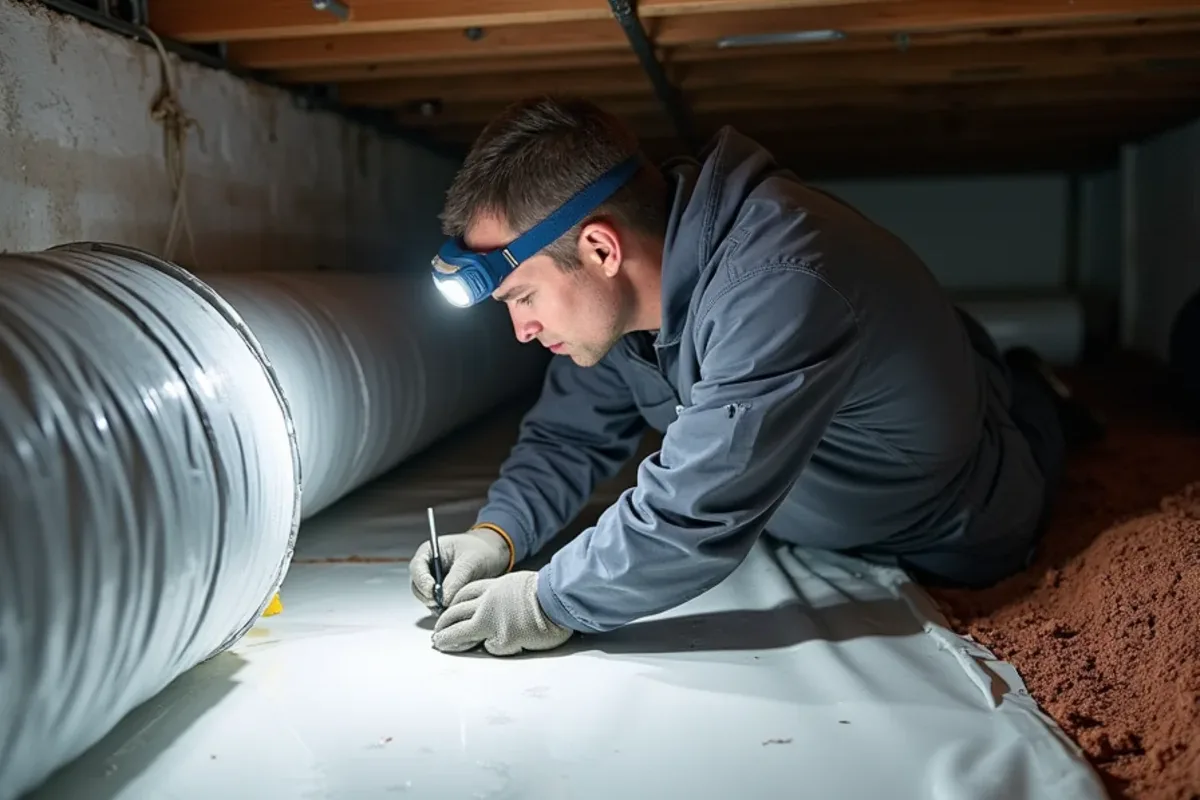
HVAC contractors handle the ducts and the equipment; crawl space specialists handle the building side. A lasting fix often needs both.
Ground vapor barrier
A continuous polyethylene barrier over the clay, overlapped and sealed at the seams, cuts the moisture rising from the soil. Torn or partial barriers are common under older Mint Hill and Monroe homes.
Drainage and gutters
Downspouts that empty at the foundation and grading that slopes toward the house put water under it after every storm. These are often the cheapest fixes and the most overlooked.
Closed crawl spaces and dehumidifiers
North Carolina's residential code allows closed crawl spaces as an alternative to vented ones. A closed crawl space seals the vents, lines the floor and walls, and dries the air with a small supply of conditioned air or a dedicated dehumidifier. The sealing is specialty work. On the HVAC side, a crawl space or whole-home dehumidifier is sized and installed to hold relative humidity in a safe range, and the licensed contractor confirms whether a permit applies.
What North Carolina's Code Says About Drying a Closed Crawl Space
Once the vents are sealed, a closed crawl space must have a way to dry the air. North Carolina's residential code (Section R409.5) lists the methods, and at least one is required:
| Method | What it involves | Who installs it |
|---|---|---|
| Dehumidifier | A permanently installed unit rated at least 15 pints a day, drained to daylight or a condensate pump, on its own outlet | Crawl space or HVAC contractor; electrical work may need its own license |
| Supply air | Conditioned air ducted from the home system at 1 cubic foot per minute per 30 square feet of floor, with a backflow damper and no return from the crawl space | An H-3 licensed heating contractor, per the State Fire Marshal interpretation |
| House air | A continuous-duty fan blowing house air into the crawl space at 1 cubic foot per minute per 50 square feet | Not an H-3 job when separate from the ducted system |
| Exhaust fan | A continuous-duty fan exhausting crawl space air outdoors at 1 cubic foot per minute per 50 square feet | Not an H-3 job |
Two details matter for your ducts. The code does not allow a return air duct from the crawl space into the house system, so a leaky return down there is a problem to fix, not a feature. And ductwork in a crawl space is expected to be sealed with mastic or another approved closure system. Code details change between editions, so the contractor confirms the current requirements and any permit for your address.
When Replacement Is the Moment to Fix It
If your system is near replacement age, plan the duct and moisture work alongside it. New equipment sized with a Manual J calculation and connected to sealed, insulated, properly supported ducts runs longer, steadier cycles and pulls more water out of the air. Putting a new heat pump on rusted, leaking crawl space ducts wastes much of what you paid for. Our guides to HVAC installation and replacement and whether to repair or replace an older system cover that decision.
Crawl space homes are common across the area. HVAC service in Mint Hill covers many 1970s and 1980s ranch homes on crawl spaces, and HVAC service in Monroe covers older homes near downtown with retrofitted ductwork as well as the 2000s subdivisions around them. Every HVAC technician we send is licensed and insured in North Carolina. Call (321) 478-0693 to schedule a duct and crawl space inspection.
The Bottom Line on Crawl Space Humidity and Ducts
Sweating, sagging crawl space ducts are a moisture problem first and a duct problem second. Fix the water sources (gutters, grading, the vapor barrier), then seal, insulate and re-hang the ducts, and decide whether the space stays vented or becomes a closed crawl space with a code-approved drying method. Start with a duct inspection through ductwork repair and humidity control, and plan it with any HVAC installation and replacement so the new system is connected to ducts that hold its air.
From the job site
What we find under Matthews-area homes
Open the crawl space door on a late-summer afternoon under an older Mint Hill or Monroe home and the pattern is familiar: a vapor barrier covering half the clay, fiberglass duct wrap hanging in wet sheets, and a trunk line with a stripe of rust along its bottom seam. Flex runs installed in the 1990s often sag between rotted straps and rest on the dirt, where they kink and starve the rooms at the end of the line.
The homes that hold up well share three things: a complete, sealed ground barrier, gutters and grading that keep storm water away from the foundation, and ducts sealed with mastic and wrapped in continuous insulation. When any one of those is missing, the ducts usually show it first, because they are the coldest surface down there for half the year.
- A musty smell that appears only when the AC starts usually points to a return duct leak under the house.
- After a wet spring, have the crawl space checked before the first heat wave; it is easier to dry before the ducts start sweating.
- Homes on low lots near creeks such as Four Mile Creek tend to see standing water under the house after heavy storms, so their ducts deserve a closer look.
Related questions
Why are the ducts in my crawl space sweating?
What indoor humidity should I aim for in a Matthews summer?
Should crawl space ducts be repaired or replaced?
Is a closed crawl space allowed in North Carolina?
Written by the Littleton Premier Heating & Air team for homeowners in Matthews and nearby communities. General information, not a diagnosis or engineering advice: leave refrigerant, electrical and gas work to a licensed HVAC technician, who has the final word on your system. Every HVAC technician we send is licensed and insured in North Carolina. Last reviewed October 2026.