
By the Littleton Premier Heating & Air team · Updated
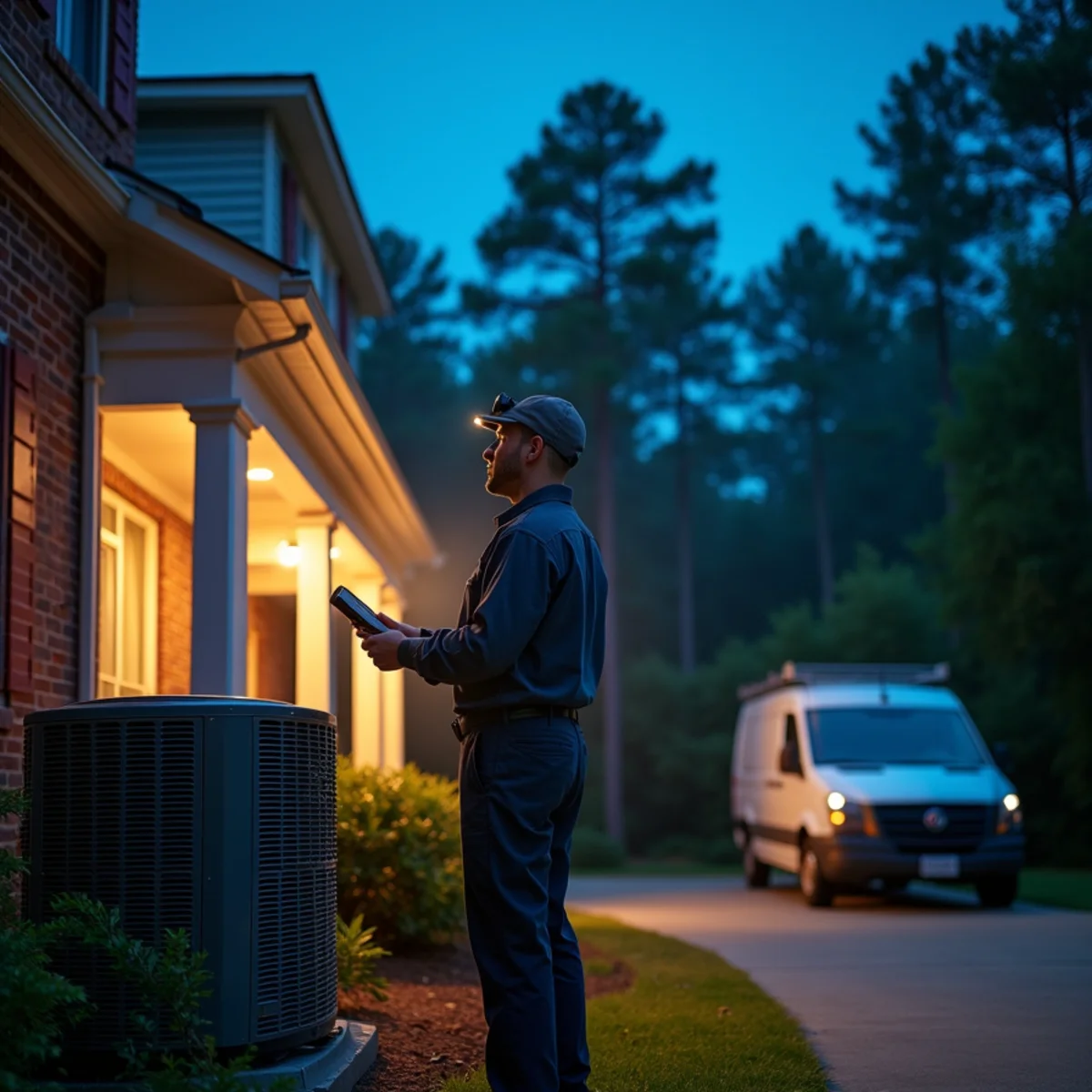
For emergency HVAC repair in Matthews, NC, call (321) 478-0693 at any hour: a live person answers, asks a few safety questions and dispatches the nearest available licensed HVAC technician. We confirm realistic timing on that call, and you hear the price before any work starts.
Emergencies here follow the weather. A run of mid-90s July afternoons finishes off tired capacitors and compressors all over town, and the first hard freeze finds every weak igniter and heat pump defrost board at once. Not every breakdown needs a technician at midnight, and we will tell you plainly when it can wait for a daytime visit. If you smell gas or a carbon monoxide alarm is sounding, leave the house first and call Piedmont Natural Gas and 911 from outside, then call us once they say it is safe.
What counts as an HVAC emergency
An emergency is a failure that puts people, pets, pipes or the house at risk if it waits until morning. A rough guide:
| What is happening | What to do |
|---|---|
| No cooling, the house climbing into the mid-80s, and an infant, older adult or someone with a health condition at home | Call now |
| No heat with the forecast at or below freezing overnight | Call now; pipes on outside walls and in crawl spaces can freeze |
| A burning, electrical or hot-plastic smell from a vent or the unit | Turn the system off at the thermostat, then call now |
| Water dripping through a ceiling below the attic air handler | Turn the system off, catch the water, then call now |
| Gas smell or a carbon monoxide alarm | Leave the house; call Piedmont Natural Gas and 911 from outside first |
| An HVAC breaker that trips again after one reset | Leave it off and call |
| A rattle or weaker airflow on a mild evening while the system still runs | Usually fine to book a daytime visit |
Daytime visits for AC repair or furnace and heating repair often avoid an after-hours charge, so if your situation matches the last row, waiting for morning can make sense.
Emergencies we handle: no cooling in a heat wave, no heat on a freezing night, burning smells, water through the ceiling, tripping breakers
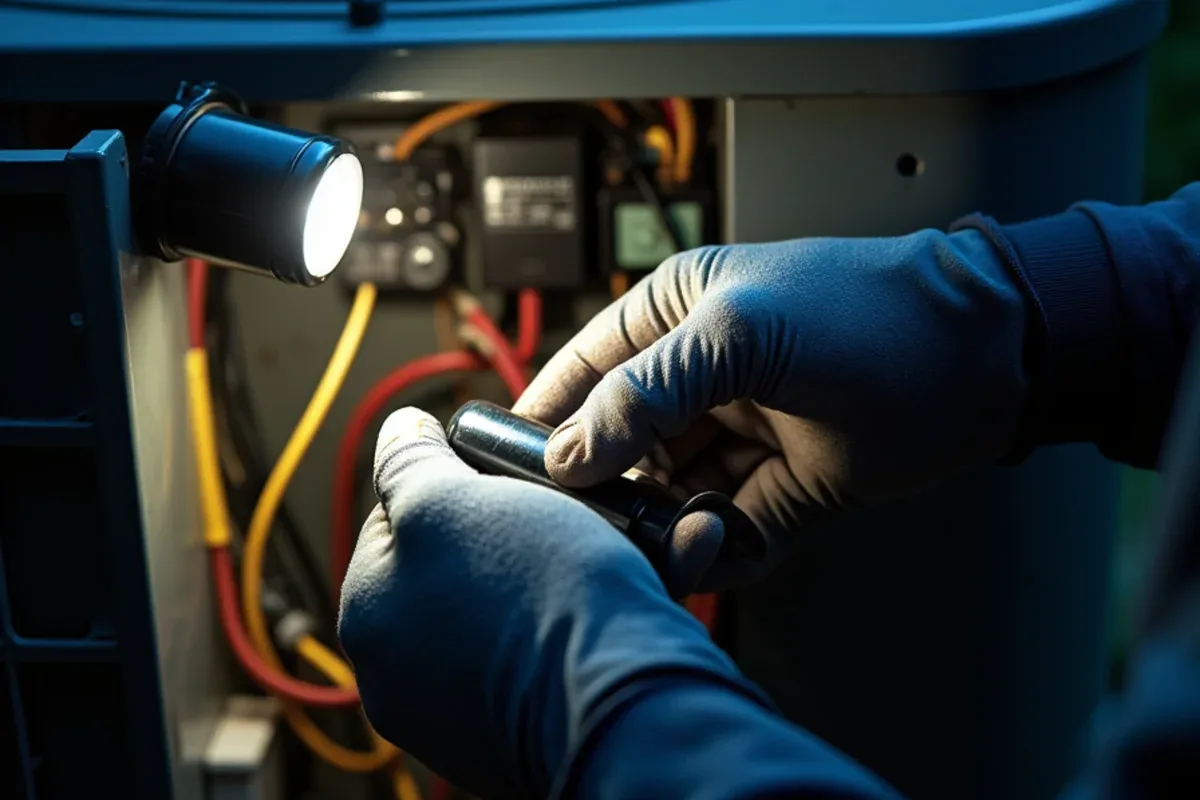
- No cooling in a heat wave. The usual causes are a failed run capacitor, a pitted contactor, a dead condenser fan motor, or a coil frozen solid behind a clogged filter or low charge. Many are fixed on the first visit when the part is on the truck; a failed compressor is a bigger job.
- No heat on a freezing night. Gas furnaces quit on a cracked igniter, a dirty flame sensor, a failed inducer motor or a tripped limit switch. Heat pumps fail on defrost controls, reversing valves or the backup heat strips; our heat pump repair page covers how they behave in the cold.
- Burning smells. A dusty smell on the first heating day of fall is normal and fades after the first run. A sharp electrical or melting-plastic odor is not: a motor, wire or control board may be overheating.
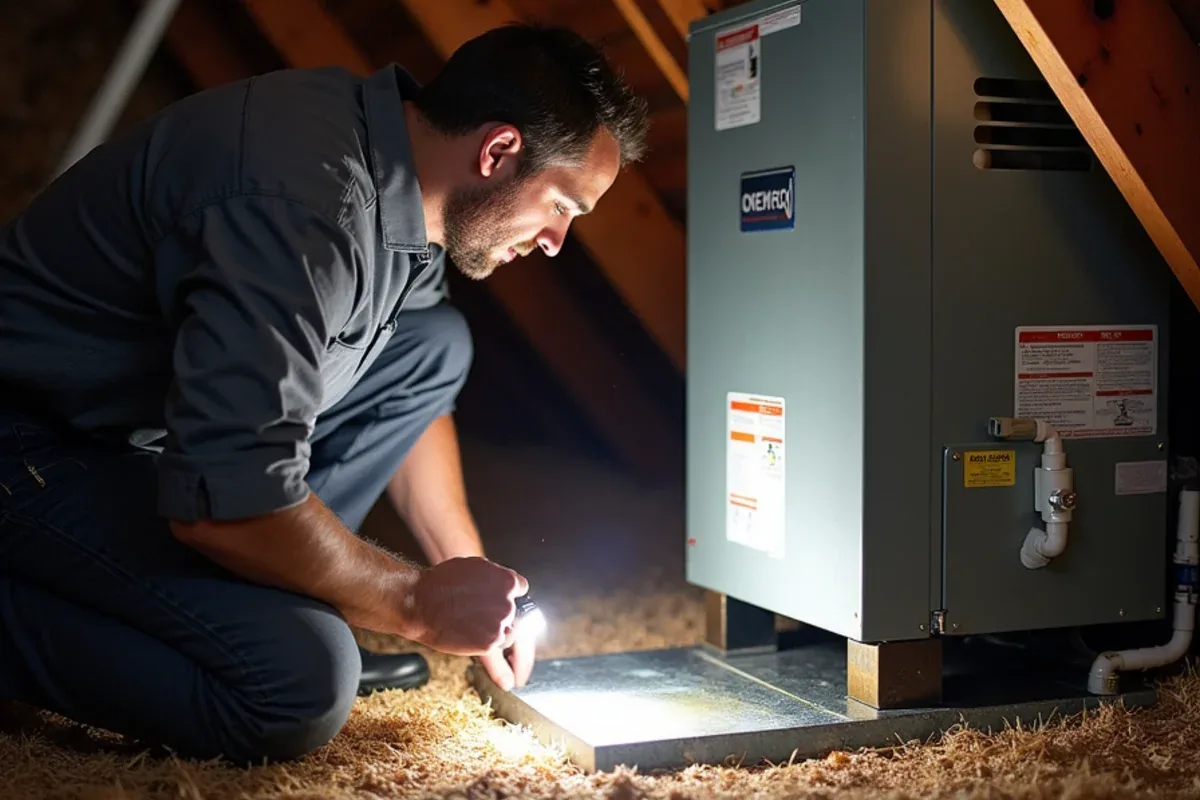
- Water through the ceiling. In two-story homes with attic air handlers, a clogged condensate line or rusted-out drain pan can soak drywall quickly. Summer humidity means those lines carry a lot of water every day.
- Tripping breakers. A single trip after a storm may be a fluke. A second one points to a shorted compressor, a failing motor or damaged wiring, and resetting it over and over can make the damage worse.
What to check before you call: thermostat, breaker, filter, float switch, outdoor disconnect
These checks are safe for any homeowner, take about ten minutes, and now and then get the system running again. Our checklist for when the AC stops working has more detail, and for gas heat, see what to check when a furnace is not igniting.
- 1Thermostat. Set to Cool or Heat, a few degrees past room temperature, with the screen lit. Replace the batteries if it uses them.
- 2Breaker. Find the breakers for the indoor and outdoor units in the panel. Reset a tripped one once; if it trips again, leave it off.
- 3Filter. Pull it out. A gray, matted filter can freeze the coil in summer or trip the furnace limit switch in winter. Replace it if you have a spare.
- 4Float switch. Look at the pan under the attic or closet unit. Standing water means the float switch has probably shut the system down to prevent a ceiling leak. Do not bypass it; the drain needs clearing.
- 5Outdoor disconnect. The gray box on the wall beside the outdoor unit should be on, with the pull-out block seated or the lever up. A mower or pressure washer may have bumped it.
- 6Furnace panel and switch. On a gas furnace, make sure the front panel is seated, since a safety switch keeps the unit off otherwise, and that the nearby service switch is on.
If the house is getting dangerously hot, move everyone to the lowest, coolest room, close blinds on the sunny side, run fans and keep drinking water. If someone shows signs of heat illness, call 911.
Never heat the house with an oven, a grill, a camp stove or a generator indoors. These cause carbon monoxide poisonings every winter. Use only space heaters listed for indoor use, plugged straight into a wall outlet and kept three feet from anything that burns.
Gas smell or a CO alarm: leave the house and call the gas utility or 911 first
Get everyone out now, pets included. Do not flip light switches, unplug anything, use a phone inside or look for the leak. Once you are outside and well away from the house, call Piedmont Natural Gas (or your gas supplier) and 911. Go back in only when they tell you it is safe.
A carbon monoxide alarm gets the same response. CO has no smell or color, so treat every alarm as real even if nobody feels sick. Headache, dizziness, nausea or confusion in more than one person at the same time is a strong warning sign.
Once the gas company or fire department clears the house, call us. We dispatch a licensed HVAC technician to find the cause on the furnace side: a cracked heat exchanger, a blocked or disconnected flue, a failed inducer motor or a leaking gas connection at the furnace. The furnace stays off until it is repaired and tested safe.
How 24/7 dispatch works: live answer, nearest technician, price before work
- 1A live person answers (321) 478-0693 at any hour, nights, weekends and holidays included, with no voicemail queue.
- 2Safety questions first: any gas smell, burning odor, water or tripped breaker, and who is home, especially anyone vulnerable to heat or cold.
- 3The system and the symptom: heat pump, gas furnace or AC, roughly how old, and what it is doing now, so the technician can bring likely parts.
- 4Dispatch of the nearest available licensed HVAC technician who works on your type of system.
- 5Timing stated on the call, based on where that technician is and how many calls are ahead. If it changes, we tell you.
- 6Diagnosis and a price before work, including any after-hours charge, approved by you before the repair begins.
- 7Repair and test, or a safe temporary fix when a part has to be ordered, with the return visit explained.
About waits, honestly: on an ordinary weeknight they are often shorter. During a heat wave, when every air conditioner in the Charlotte area is running flat out, or on the first hard freeze, when furnaces and heat pumps fail together, calls stack up across the whole metro and waits stretch for every company. We tell you that on the phone instead of quoting a time we cannot keep.
Every HVAC technician we send is licensed and insured in North Carolina. Littleton Premier Heating & Air connects you with independent licensed HVAC contractors who perform the work.
While you wait: keeping people, pets and pipes safe
Once the call is in, the goal is to keep everyone safe and the house from getting worse until the technician arrives. The steps differ by season.
In a summer heat wave
- Watch the people most at risk. Older adults, babies, anyone pregnant or with heart or lung conditions, and pets overheat first. Dizziness, confusion, vomiting or hot, dry skin are signs of heat illness: get the person somewhere cool and call 911 for anything beyond mild symptoms.
- Use the coolest room. In a two-story Matthews home that is usually a main-floor room on the north or east side. Close blinds on sunny windows and keep doors to the hot upstairs shut.
- Skip the oven and dryer and run fans to move air across people, not to cool empty rooms.
- Know when to leave. If the house stays dangerously hot, a relative, a library or a store with air conditioning is a reasonable place to wait.
On a freezing night
- Protect the pipes. Many Matthews homes run water lines through the crawl space and up outside walls. Open the cabinet doors under sinks on outside walls, let a cold and hot tap drip in the farthest bathroom and kitchen, and keep crawl space vents and access doors closed.
- Heat one room safely. Use a space heater made for indoor use, plugged straight into a wall outlet, three feet from anything that burns, and never left running unattended or while sleeping.
- Never heat with an oven, grill, camp stove or generator indoors, and keep a working carbon monoxide alarm near sleeping areas.
Help the technician get straight to work
Turn on the porch light, put pets in a closed room, and clear a path to the air handler or furnace, whether it sits in the attic, a closet or the crawl space. Mention any gate code, a pull-down attic ladder that sticks, or a crawl space door that is hard to find. Small things like these save real time at 2 a.m.
Storm, ice and power-surge damage to HVAC equipment around Matthews
Matthews gets hard summer thunderstorms with lightning and quick power flickers, and some winters an ice storm glazes trees and lines across the Piedmont and leaves homes without power for hours or days. Both can damage HVAC equipment in ways that show up only when the power returns:
- Power surges and brownouts can burn out capacitors, contactors, control boards and the electronics in variable-speed equipment.
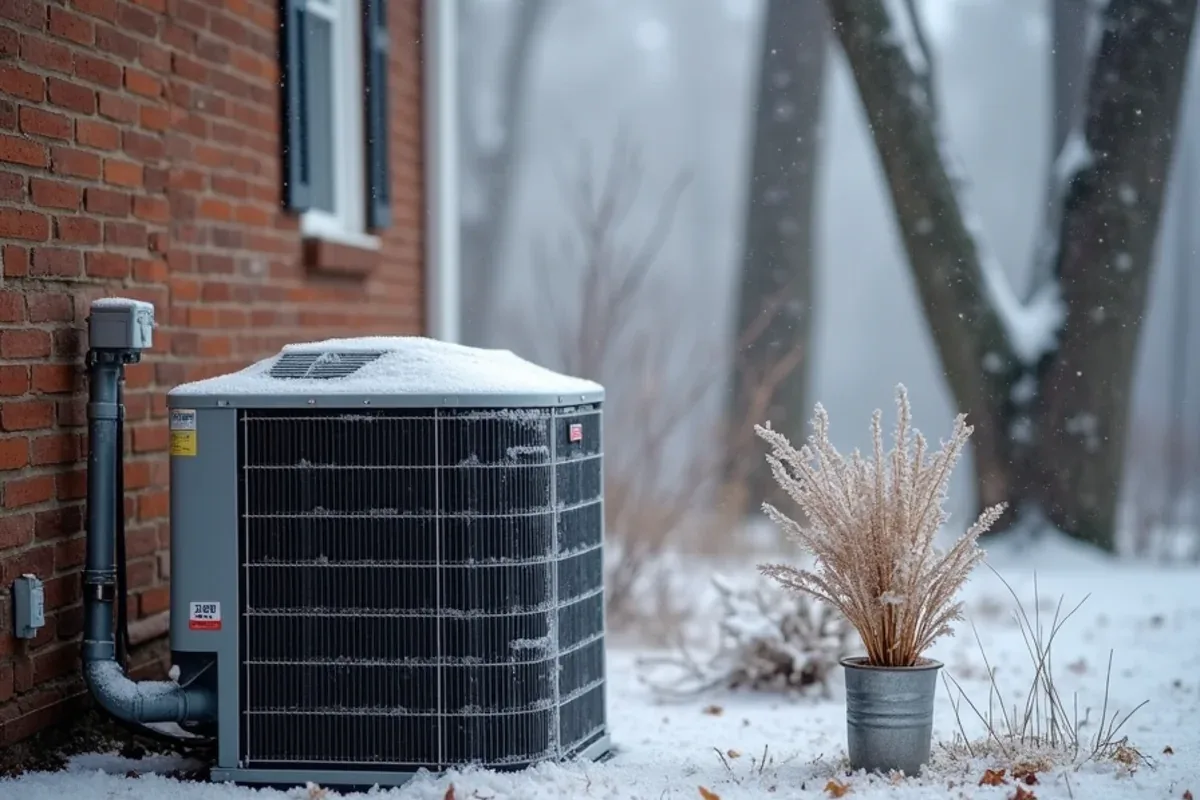
- Ice on a heat pump is normal in small amounts, but freezing rain can seal the coil and fan in a solid shell. Never chip it off; switch the thermostat to emergency heat and call.
- Fallen limbs from the pines and hardwoods shading many Matthews yards can crush a condenser's fan guard or coil.
- Standing water around a low outdoor pad, or in a crawl space with a furnace or ducts, needs a technician's look before the system restarts.
After an outage, set the thermostat to Off, wait until power has been steady for several minutes, then turn the system back on. If the outdoor unit hums without starting, a breaker trips or nothing happens, turn it off and call rather than resetting it again and again. Before winter, our guide to a heat pump blowing cold air explains what is normal in a freeze.
What an emergency HVAC call includes
- A live person on the phone 24/7, with safety questions asked first
- Dispatch of the nearest available licensed technician for your system type
- Timing stated on the call and updated if it changes
- Any after-hours charge disclosed before the technician is sent
- Diagnosis of AC, heat pump, gas furnace or electric heat faults
- A written price before any repair starts
- A safety check of wiring, drains and, on gas furnaces, venting before the technician leaves
Why choose Littleton Premier Heating & Air for 24/7 emergency hvac repair
A person, not a voicemail
Calls to (321) 478-0693 reach a live person at 3 a.m., on Sundays and on holidays, and dispatch starts on that call.
Licensed and insured
Every HVAC technician we send is licensed and insured in North Carolina.
Price before work
You hear about any after-hours charge before a technician is sent, and the repair price before work begins.
Straight answers on timing
We give a wait we can actually meet, and say so plainly when a heat wave or freeze has calls backed up.
Nights, weekends and holidays: how after-hours pricing works
After-hours repairs are priced the same way as daytime ones, with timing added in. Many independent contractors charge more for nights, weekends and holidays, and whether a charge applies depends on the contractor, the hour and the day. The dispatcher tells you before anyone is sent, the technician prices the repair before starting, and if the problem can safely wait for a weekday, we say so. What moves the price:
- The hour and day: late-night, weekend and holiday calls often carry an after-hours charge
- Demand during a heat wave or freeze, when calls stack up across the Charlotte area
- Which part failed, from a capacitor or igniter to a compressor or control board
- Whether the part is on the truck or a return trip is needed
- Refrigerant type, and finding a leak before any refrigerant is added
- Attic, closet or crawl space access in the dark
- A full repair now versus a safe temporary fix until daytime
- Whether the diagnostic charge is credited toward the repair
We don't publish prices we can't stand behind: you hear the price for your system, from the technician who diagnosed it, before any work starts.
24/7 Emergency HVAC Repair around Matthews, NC
Emergency calls around Matthews rise and fall with the weather: condensers quit in July heat waves, from townhomes off Independence Boulevard to subdivisions along NC 51, and heat pumps and gas furnaces fail on the first freezing nights. We take emergency calls across our 24/7 HVAC service areas, from after-hours AC and heat pump calls in Stallings to no-heat calls in older Mint Hill homes and emergency repairs in Indian Trail, with timing confirmed on every call.