
Repair or Replace
Repair or Replace a 15-Year-Old HVAC System? A Guide for Matthews-Area Homes
By Littleton Premier Heating & AirUpdated 7 min read
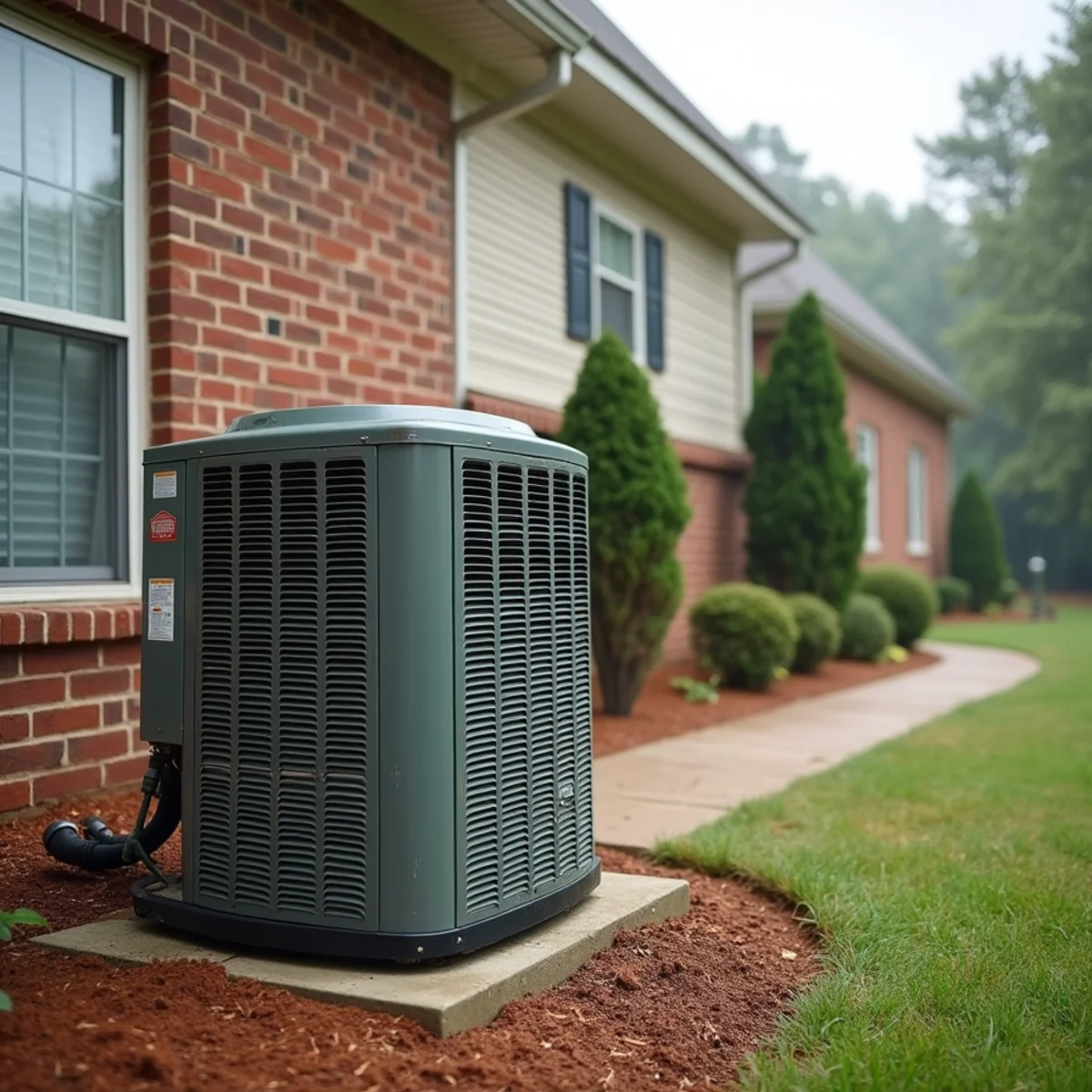
The short answer
Repair a 15-year-old Matthews-area system when a small electrical part failed, it uses R-410A and it still controls humidity. Lean toward replacement when the compressor or a coil fails, it runs on R-22, repairs keep stacking up or the upstairs never cools. Year-round heat pumps often wear out before gas furnaces.
Why 15 Years Is the Decision Point Here
Matthews and its neighbors grew fast in the 1990s and 2000s. Indian Trail went from under 2,000 people in 1990 to nearly 40,000 by 2020, and most of its homes went up between 1995 and 2010. Many of those houses are already on their second system, and the replacements installed in the late 2000s and early 2010s are now reaching the age the originals were when they failed.
Heat pumps are the most common system in post-1990 Matthews homes, and they work all year: cooling through long, humid summers and heating through winters with plenty of nights at or below freezing. That double duty puts more hours on the compressor than an air conditioner paired with a gas furnace. A maintained gas furnace often outlasts the AC or heat pump beside it.
| Equipment | Typical life | What wears it out here |
|---|---|---|
| Central AC (split system) | About 12 to 15 years | Long cooling seasons and heavy humidity load |
| Heat pump | About 10 to 15 years | Runs summer and winter; defrost cycles and reversing valve wear |
| Gas furnace | About 15 to 20 years or more | Heat exchanger condition usually decides the end |
| Ductwork | Often 20 to 30 years | Crawl space ducts over damp red clay can fail sooner |
When Repair Is the Right Call
A 15-year-old system is not automatically finished. Repair is usually the better move when:
- The failed part is on the electrical side: a capacitor, contactor, fan motor or control board
- The system uses R-410A, so refrigerant is still available for future service
- There has been no pattern of breakdowns over the last two or three summers
- The house stays comfortable and indoor humidity stays reasonable in July
- The ductwork is in decent shape, with no crushed or disconnected runs
In those cases a solid repair can buy several more seasons. Ask the technician to note anything else that looks worn so the next failure is not a surprise. The AC repair page explains what a typical diagnosis covers, and how AC repair cost is set in Matthews shows where common repairs fall on the price ladder.
When Replacement Makes More Sense
Replacement deserves a real comparison when one or more of these is true:
- The compressor or a coil has failed. These are the largest repairs on any system, and on a unit past 15 years the money usually goes further toward new equipment.
- The system runs on R-22. Production and import of R-22 ended January 1, 2020. Any refrigerant repair means buying scarce reclaimed refrigerant for equipment near the end of its life.
- Repairs keep stacking up. Three significant repair visits in two years is a pattern, not bad luck.
- Comfort has slipped. Upstairs bedrooms several degrees warmer than downstairs, a sticky feel in summer, or a system that runs constantly without catching up.
- A cracked heat exchanger. On a gas furnace this is a safety problem and usually ends the furnace's life.
A common rule of thumb: if a repair would cost more than about half the price of a replacement on a system past mid-life, replacement usually wins. Treat it as a starting point, not a verdict.
What about the "5,000 rule"?
You will see a shortcut repeated online: multiply the system's age by the repair price, and if the result tops 5,000, replace. It is a quick gut check, and for a 15-year-old unit it flags almost any repair beyond the smallest. Its blind spots matter here, though. It ignores refrigerant (an R-22 leak is a replace signal at any price), efficiency gains, how well the house holds humidity, and whether the indoor coil and ducts can be reused. Use it to start the conversation, then decide with the written repair price, a written replacement quote and the questions above.
Heat Pumps, Dual Fuel and Mismatched Systems
Owners in Indian Trail and Stallings often ask whether they can replace only the outdoor unit and keep the indoor air handler. On an older system the answer is usually no. A new outdoor unit is designed and rated to run with a matched indoor coil, and new equipment uses lower-GWP refrigerants such as R-454B or R-32 that an old R-22 or R-410A coil was never built for. A mismatched pair can lose efficiency, void the manufacturer's warranty and fail early.
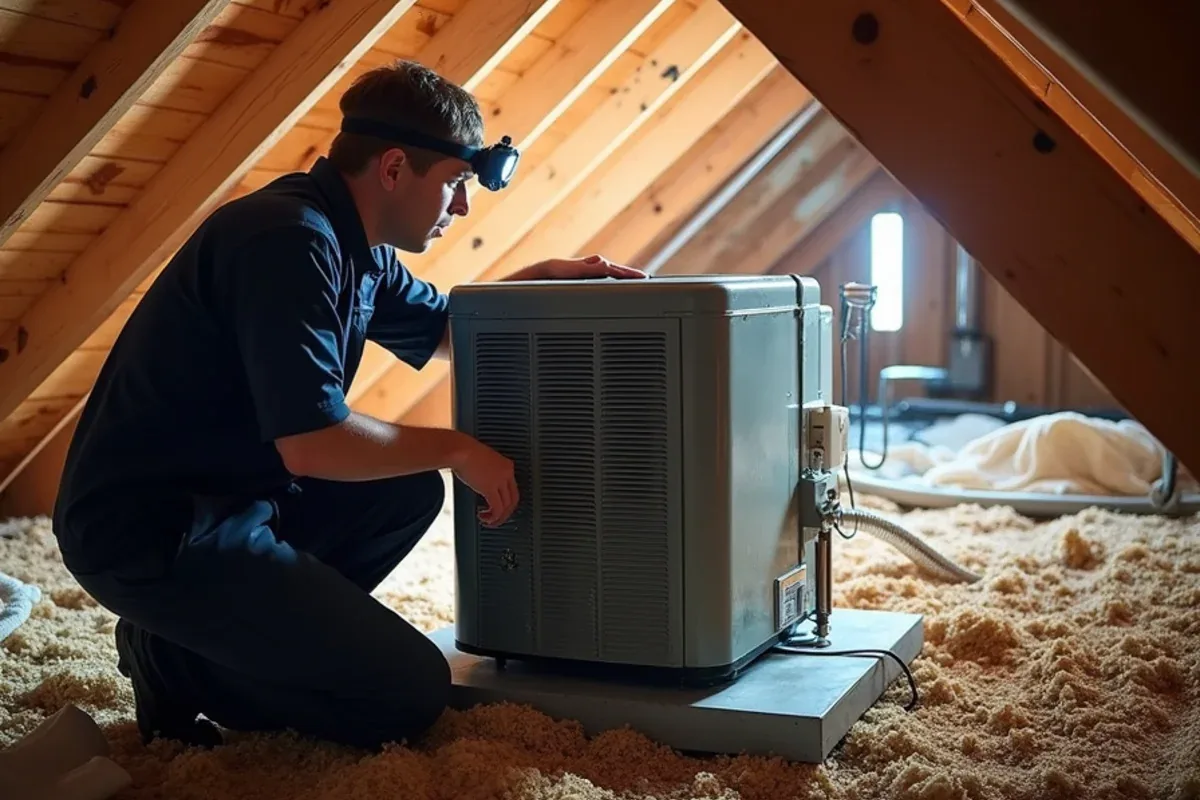
Replacement is also the moment to rethink the system type. A current variable-speed heat pump handles Piedmont winters far better than a single-stage unit from 2008, and a dual-fuel setup pairs a heat pump with a gas furnace that takes over on the coldest nights. Heat pump repair and replacement explains both options for homes that already have Piedmont Natural Gas service.
What a Replacement Quote Should Include
A good replacement is more than a box swap. Ask for:
- 1A Manual J load calculation for your house, not a size copied from the old unit. Many 1990s systems were oversized, which short-cycles and leaves humidity behind.
- 2Equipment selected under Manual S, and a look at the ducts under Manual D, with leaky or crushed sections in the attic or crawl space noted.
- 3Efficiency ratings in SEER2 and, for heat pumps, HSPF2. In North Carolina, new split heat pumps must meet at least 14.3 SEER2 and 7.5 HSPF2, and split central air conditioners at least 14.3 SEER2 below 45,000 Btu/h.
- 4The mechanical permit and inspection. In Matthews and Mint Hill, Mecklenburg County Code Enforcement issues it. In Indian Trail and the other Union County towns, the licensed contractor confirms which office issues the permit for your address and pulls it.
- 5Any Duke Energy or Piedmont Natural Gas rebate the equipment may qualify for. Programs change, so check each utility's current page.
- 6Removal of the old unit with refrigerant recovery, startup testing and warranty registration.
The HVAC installation and replacement page goes deeper on sizing and equipment choices, and our guide to crawl space humidity and ductwork covers the duct side.
A Quick Decision Table
| Situation | Lean toward |
|---|---|
| Capacitor, contactor or fan motor failed; R-410A; house comfortable | Repair |
| Small leak found and fixed at an accessible valve; R-410A | Repair, then watch the next season |
| Refrigerant leak on an R-22 system | Replace |
| Compressor failure | Replace in most cases |
| Indoor coil leak on an original attic air handler | Get both prices; usually replace |
| Third major repair in two years | Replace |
| Upstairs never cools and humidity stays high | Replace, with a load calculation and duct review |
If you live in one of the 1995 to 2010 subdivisions east of Matthews, HVAC service in Indian Trail is about 12 to 18 minutes out; actual timing depends on the nearest available technician and is confirmed on the call. Every HVAC technician we send is licensed and insured in North Carolina. You get a written price before any repair or replacement begins.
The Bottom Line on a 15-Year-Old System
At 15 years the right answer depends on what failed, not the birthday on the data plate. Fix the small electrical failures, keep a log of every repair, and start planning when the compressor, a coil or R-22 enters the picture, ideally in spring or fall rather than in a July heat wave. When replacement wins, HVAC installation and replacement starts with a load calculation; when it does not, AC repair or heat pump repair keeps the system running. Either way, the first step is a diagnosis and a written price.
From the job site
What 15-year-old systems look like around Matthews
The systems that reach this decision fastest are builder-grade heat pumps installed during the 2000s building boom in Indian Trail, Stallings and the newer parts of Matthews. Many were sized by rule of thumb, set in a hot attic and tied to ducts running through a crawl space over red clay. By year 15 the outdoor coil fins are worn from years of pollen and hose cleaning, the indoor coil may be weeping refrigerant, and the duct joints have shifted.
The other common case is the second system in a two-story home. The upstairs unit in the attic works harder and usually fails first, and owners ask whether to replace one or both. When both are the same age and use the same refrigerant, doing them together can save a second permit and a second round of labor, but keeping a healthy downstairs unit is a reasonable choice too.
- Read the data plate: the serial number usually encodes the manufacture year, and the plate names the refrigerant.
- Keep a record of every repair; a pattern is easier to see on paper than from memory.
- Ask for a duct inspection with any replacement quote, since new equipment on failing ducts underperforms.
Related questions
Is age alone a good reason to replace a working HVAC system?
Can I replace just the outdoor unit on a 15-year-old system?
Should I get more than one written quote before replacing my system?
Should I replace the furnace when I replace the AC?
Written by the Littleton Premier Heating & Air team for homeowners in Matthews and nearby communities. General information, not a diagnosis or engineering advice: leave refrigerant, electrical and gas work to a licensed HVAC technician, who has the final word on your system. Every HVAC technician we send is licensed and insured in North Carolina. Last reviewed October 2026.