
AC Troubleshooting
AC Stopped Working? 7 Things to Check Before You Call
By Littleton Premier Heating & AirUpdated 7 min read
The short answer
If your AC stopped working, check seven things in order: thermostat mode and batteries, the AC breaker (reset once), the outdoor disconnect, the air filter, the float switch, ice on the coil or copper line, and debris on the outdoor unit. A second breaker trip, a burning smell, ceiling water or a humming condenser means stop and call.
Ground Rules: Look, Switch and Swap, Never Open
Everything here is something you can safely look at, switch or replace. None of it means taking a panel off the condenser or the air handler: the condenser runs on 240 volts, and its capacitor can hold a charge after the breaker is off. Photos of the thermostat, the filter and the outdoor data plate give the technician a head start.
Most 1990s and 2000s two-story homes in Matthews, Stallings and Mint Hill have a split system: a condenser or heat pump beside the house, and an air handler or furnace in the attic, a closet or the crawl space. Find both halves first.
Checks 1 to 3: Thermostat, Breaker and Outdoor Disconnect
Check 1: The thermostat
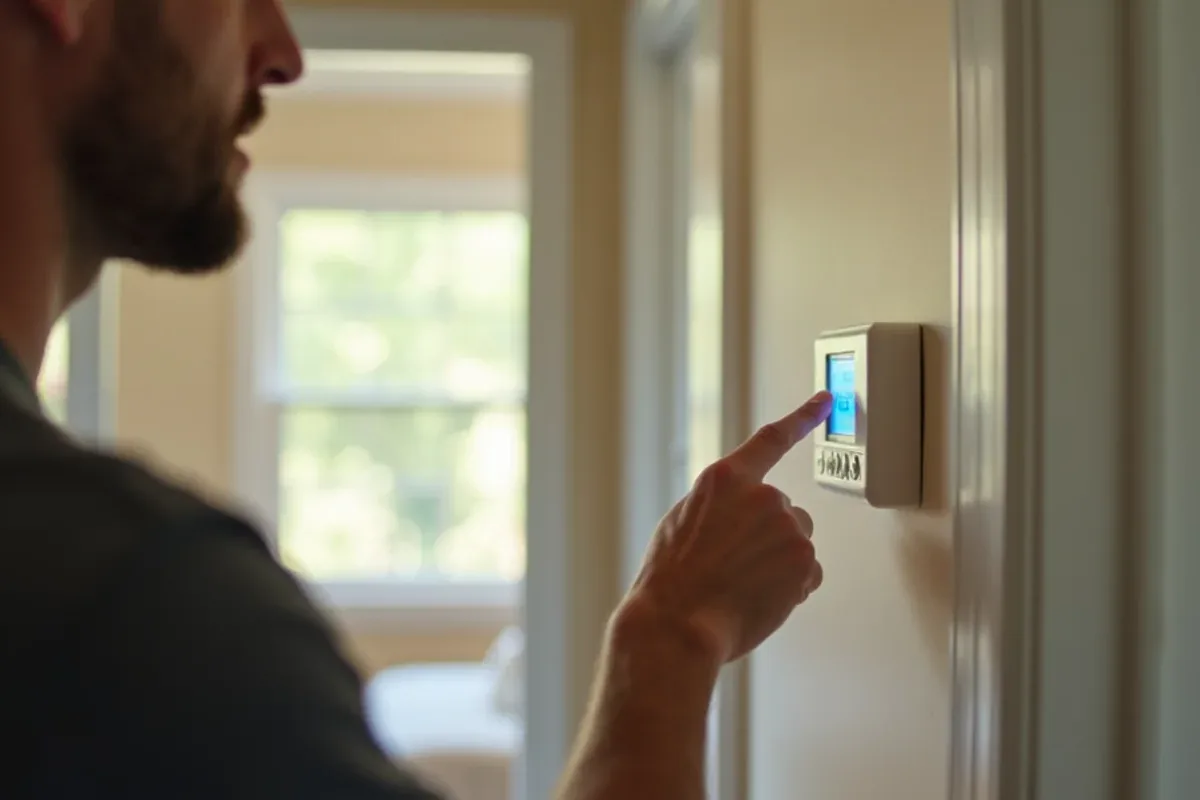
Confirm the mode reads Cool, the setpoint is a few degrees below room temperature, and the fan is on Auto. A blank screen on a battery model usually means dead batteries; on a wired model it means lost 24-volt power from the air handler, which points to Check 2 or Check 5. Smart thermostats may be running an away mode or a utility demand-response event, so check the app history. After a setting change, many systems wait about five minutes before the compressor restarts.
Check 2: The breaker, reset once
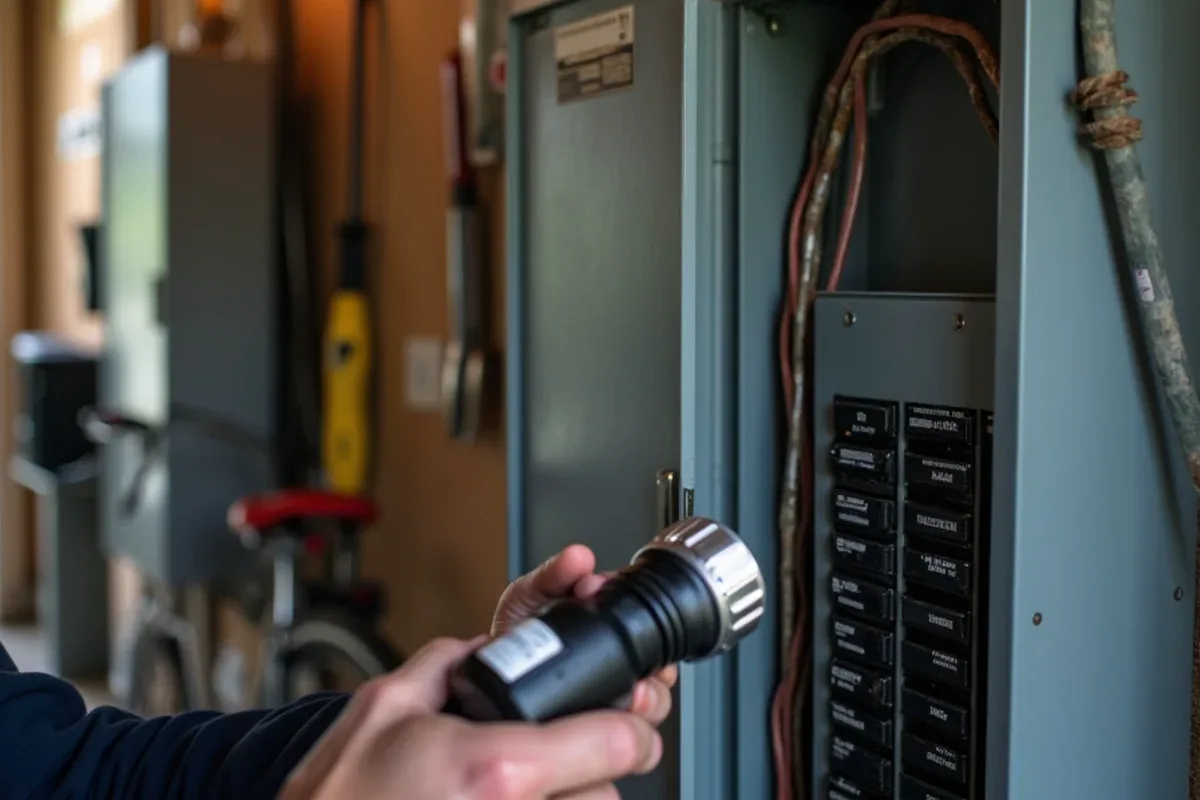
At the main panel, usually in the garage, look for breakers labeled AC, condenser, heat pump, air handler or furnace. A tripped one sits in the middle position. Push it firmly to off, then back on. Attic air handlers often have a light-style service switch near the cabinet; make sure it is on.
One reset is the limit. A second trip means a real fault, such as a shorted compressor winding, a seized fan motor or damaged wiring. Leave it off and call; repeated resets can burn out a compressor.
Check 3: The outdoor disconnect
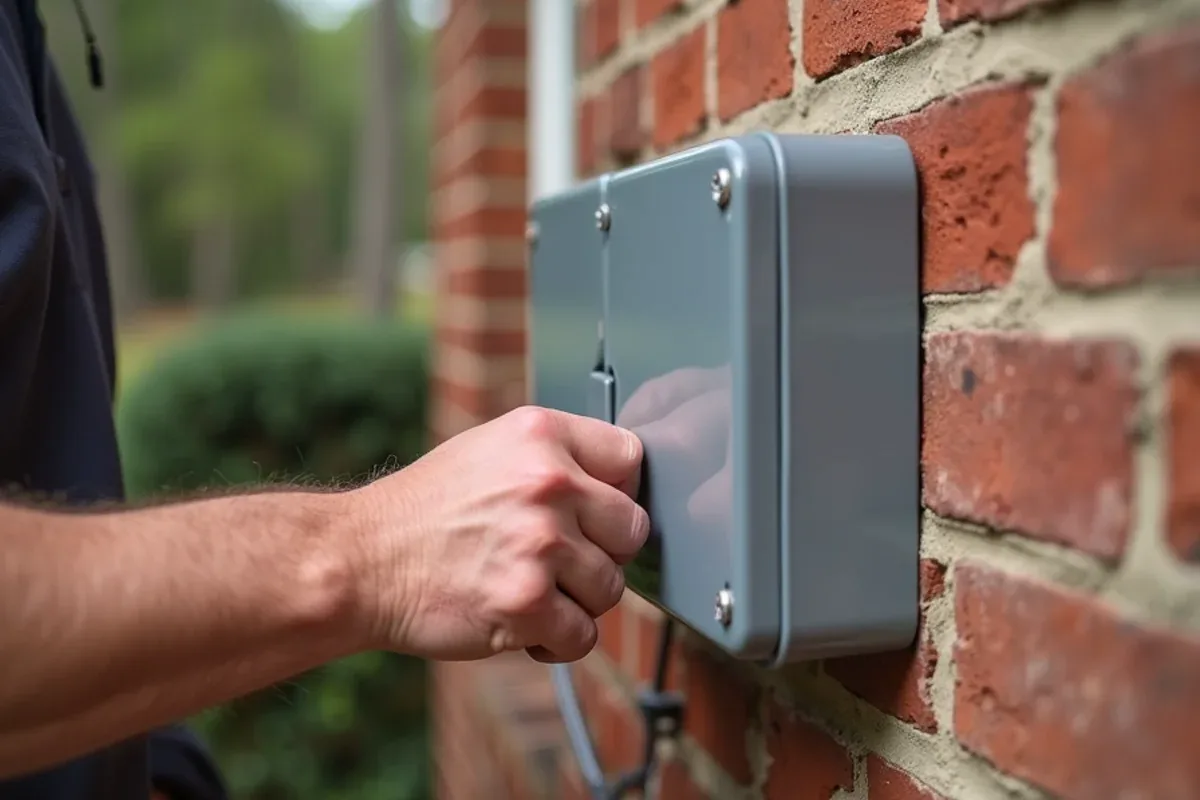
The gray box on the wall by the outdoor unit is the disconnect. Landscapers and pressure-washing crews sometimes switch it off and forget. If you know it was turned off, turn it back on. If the pull-out block is missing or the box looks scorched or rusted, leave it alone and tell the dispatcher.
Check 4: The Air Filter
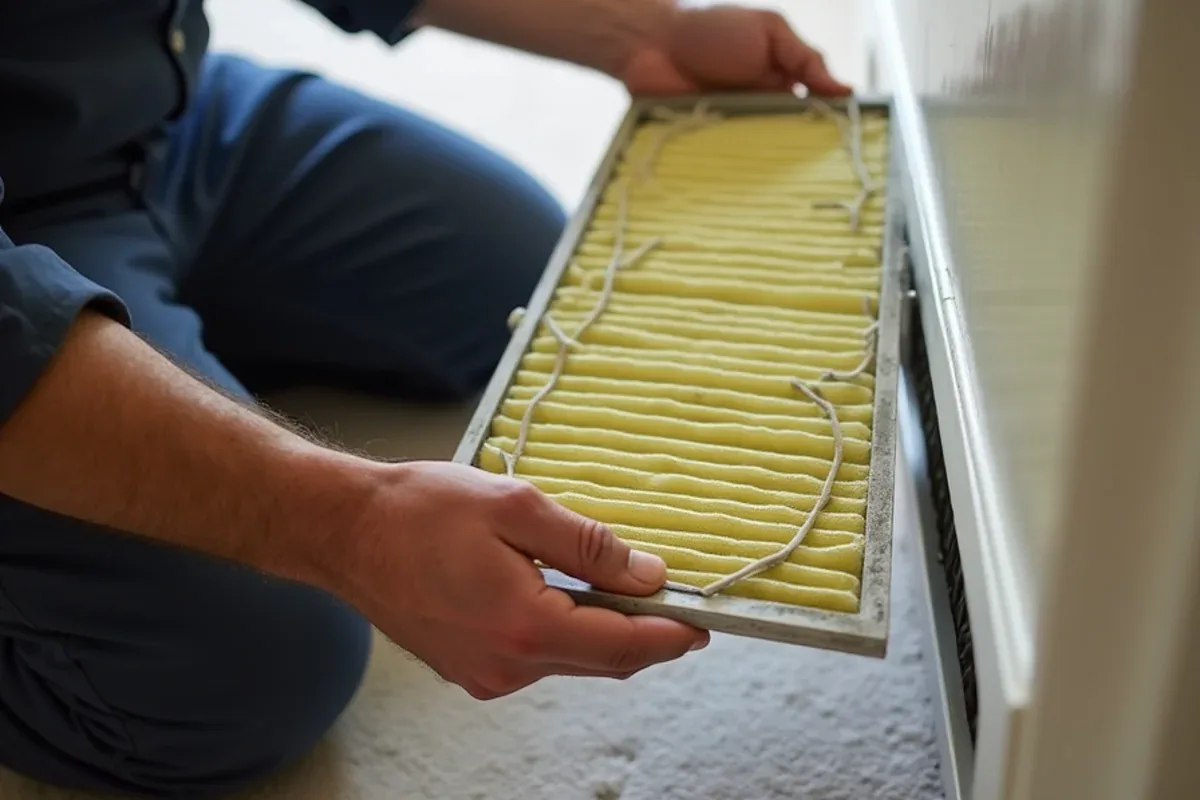
Pull the filter at the return grille or beside the air handler. If you cannot see light through it, it is choking airflow across the indoor coil, the most common road to a frozen coil in a humid Carolina summer. Replace it.
The yellow pine pollen that coats cars across Mecklenburg and Union counties in late March and April loads a one-inch filter fast, so homes near wooded lots may need a new one monthly into May. If some rooms always run warm even with a clean filter, leaky or crushed ducts may be involved; see ductwork repair and humidity control.
Check 5: The Float Switch and Condensate Drain
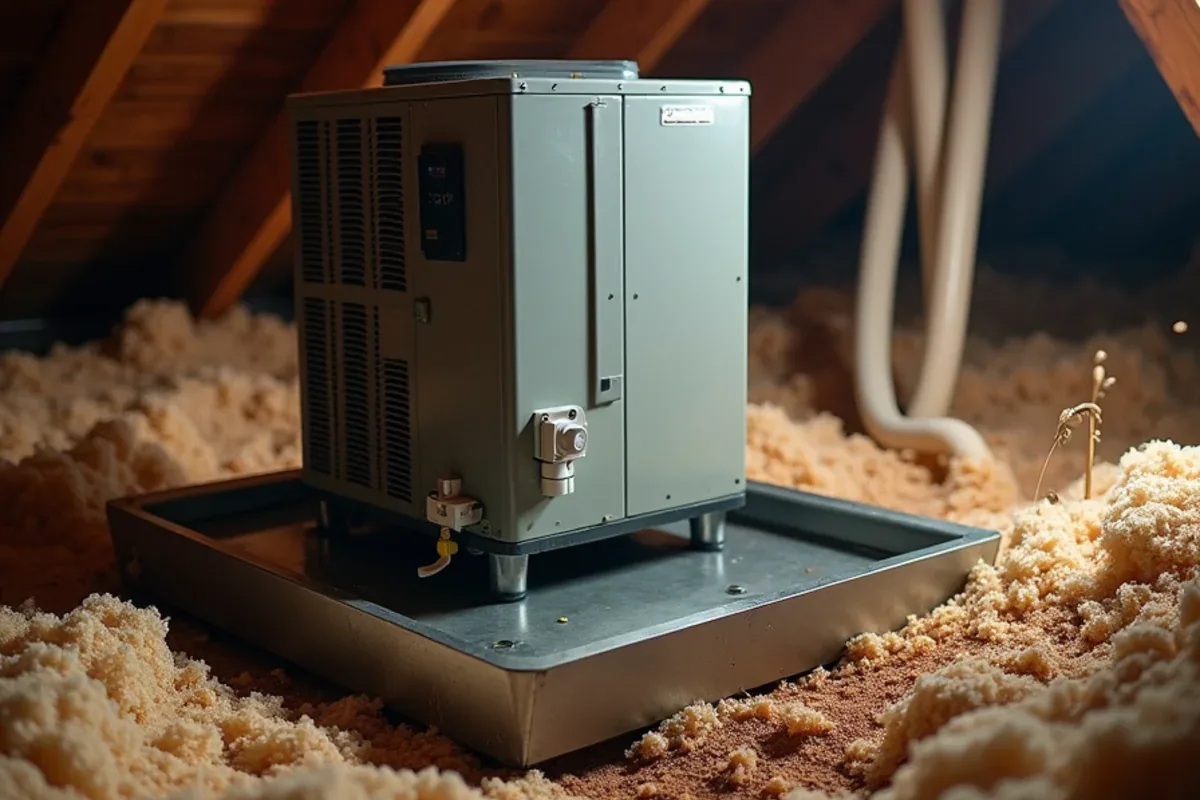
On a muggy July day an air conditioner pulls gallons of water out of the indoor air, and it leaves through a PVC drain line. When algae clogs the line, a float switch shuts off the cooling so the overflow does not come through your ceiling.
With an attic air handler, look at the secondary pan under the unit and the small float switch clipped to the pan or drain line. Standing water or a raised float means the switch did its job. A brown ring on the upstairs ceiling is the same problem, one step further along.
- Do not tape the float down or bypass its wires.
- Do turn the system off and put towels or a bucket under any drip.
- Do mention the water when you call; clearing the drain is routine on an AC repair visit in Matthews.
Check 6: Ice on the Coil or the Big Copper Line
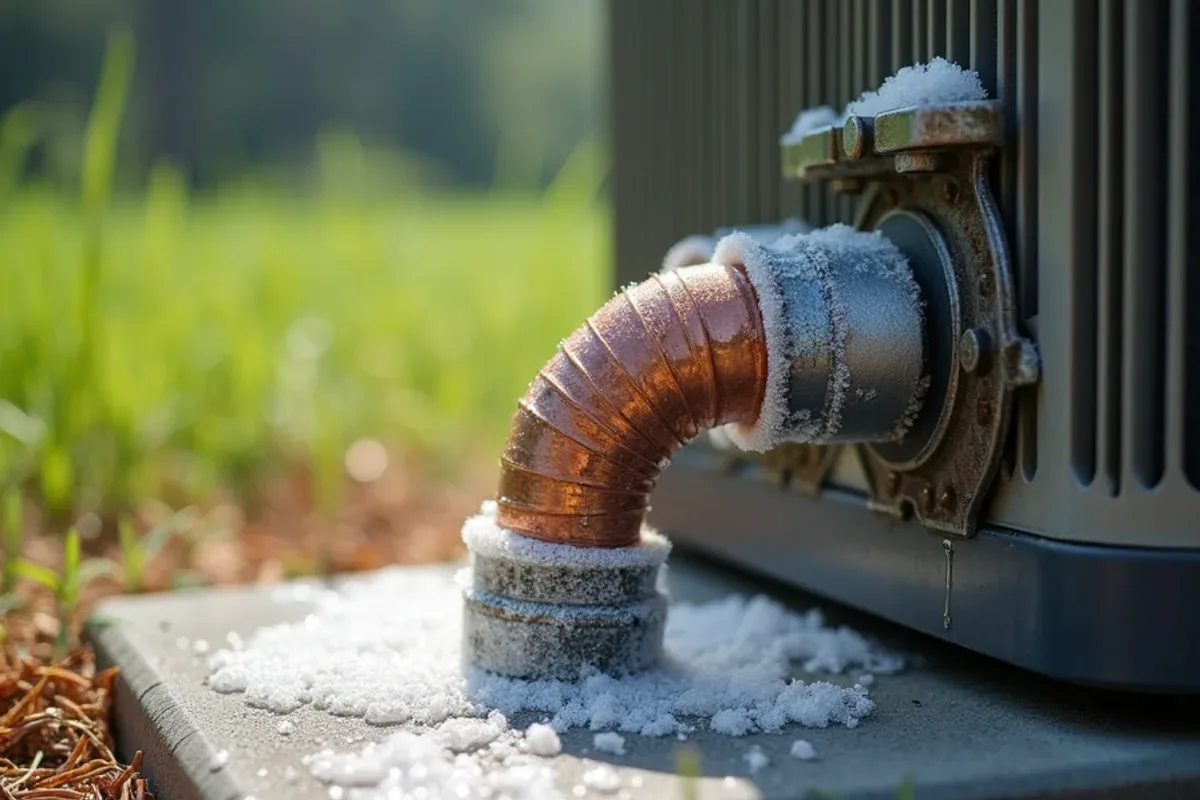
Ice on the larger insulated copper line at the outdoor unit, or water pooling around the air handler, means the indoor coil froze, usually from a clogged filter, a blower problem or a refrigerant leak.
- 1Set the thermostat to Off and the fan to On.
- 2Let the fan run until the ice is gone, which can take several hours in a damp attic.
- 3Put towels or a shallow pan where the melt water may collect.
- 4Install a clean filter, then switch back to Cool. If ice returns within a day, turn cooling off and call.
Never chip or scrape ice off the coil or the copper. The tubing is thin, and a punctured coil is one of the more expensive repairs on any system.
Check 7: The Outdoor Unit
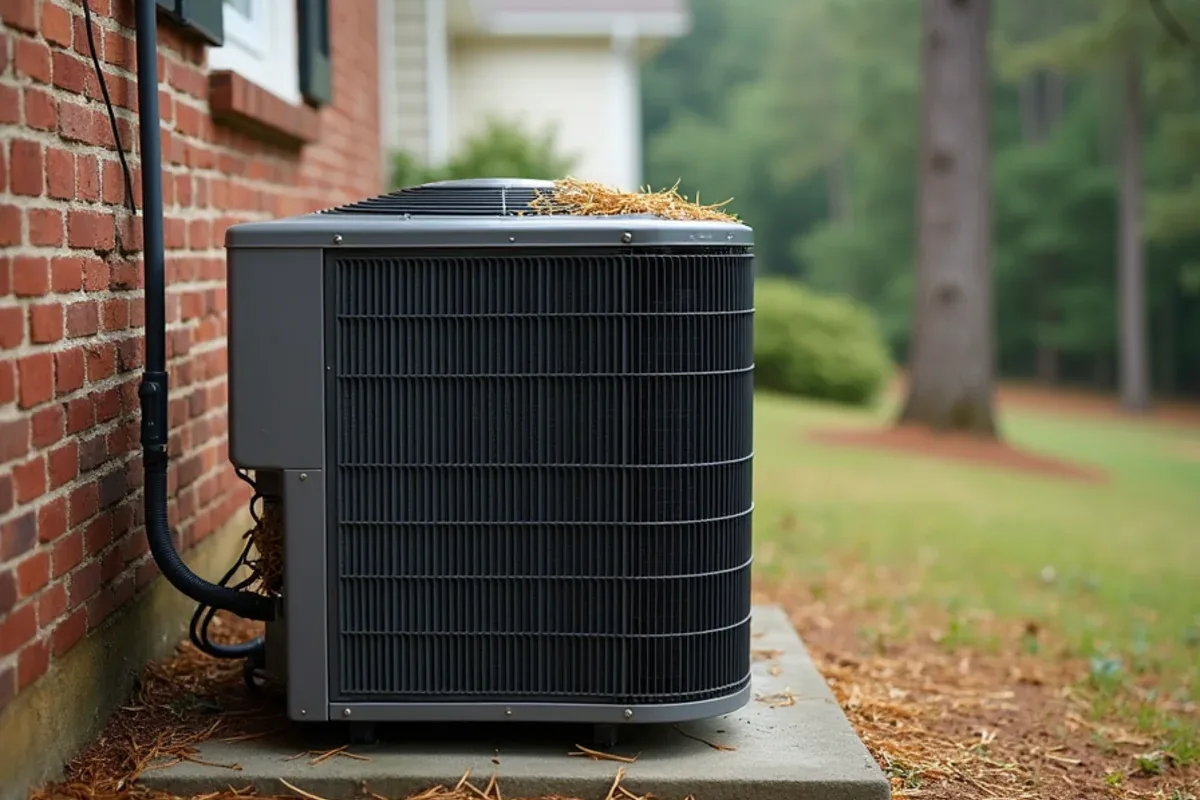
- Pine straw or clippings packed against the fins. With the disconnect off, pull debris away by hand and keep two feet clear. A gentle garden-hose rinse, never a pressure washer, removes pollen.
- A hum with the top fan standing still. Usually a failed capacitor or fan motor. Turn cooling off so the compressor does not overheat, then call.
- Clicking or buzzing with nothing starting. Often a pitted contactor or weak capacitor. Also a call.
- Both fans running but warm air inside. Possibly a refrigerant or compressor problem, which needs an EPA Section 608 certified technician.
Two Things That Look Like a Dead AC but Are Not
Right after a power outage
When the power comes back after a summer storm, many systems wait a few minutes before the compressor restarts, and some thermostats reboot to a default schedule or to Off. Give it five to ten minutes, confirm the thermostat still says Cool with the right setpoint, and only then start the checklist. If the outdoor unit hums or stays silent after that, a surge may have taken out a capacitor, contactor or board fuse, which is a job for a technician.
Closed registers and blocked returns
A room that suddenly stops cooling after a furniture move or a new rug often has a closed supply register or a return grille hidden behind a couch. Shutting too many registers to push air upstairs can also starve the indoor coil of airflow and freeze it. Open the supplies, clear 12 inches in front of every return, and see whether cooling recovers before deciding the AC itself has failed.
When a Check Becomes a Service Call
| What you find | What to do next |
|---|---|
| Breaker trips a second time | Leave it off and call |
| Burning, electrical or hot-plastic smell | Thermostat off, breaker off, then call |
| Condenser hums but the fan does not turn | Cooling off, then call |
| Water through a ceiling or a full secondary pan | System off, catch the water, call |
| Coil refreezes after a full thaw and a new filter | Cooling off, fan on, call |
| House past the mid-80s with an elderly, infant or medically fragile person at home | Call now and move them somewhere cool |
Treat that last row as an emergency. Our 24/7 emergency AC repair line is answered by a live person, and we confirm timing on the call based on the nearest available technician.
Smell gas near a furnace or water heater? Leave the house first, then call Piedmont Natural Gas and 911 from outside before you call us. Do not flip switches or look for the source.
What to Tell the Dispatcher
Say which checks you did, whether each fan runs, any sound, smell or water, and whether anyone at home is sensitive to heat. Every HVAC technician we send is licensed and insured in North Carolina. The technician diagnoses first and gives you a written price before work starts.
HVAC service in Stallings is about 5 to 10 minutes from Matthews; actual timing depends on the nearest available technician and is confirmed on the call. Wondering if an older unit is worth fixing? Read how AC repair cost is set in Matthews and whether to repair or replace a 15-year-old system.
The Bottom Line When the AC Quits
Work the seven checks in order, give a system a few minutes after any outage, and stop the moment something points past a switch or a filter: a second breaker trip, ice, water through a ceiling, a burning smell or a humming outdoor unit. That is when AC repair from a licensed technician saves money instead of costing it. If it is late, hot, or someone at home is struggling with the heat, call (321) 478-0693; a person answers 24/7.
From the job site
What no-cooling calls look like around Matthews in July
The first stretch of mid-90s days with heavy humidity brings a predictable run of calls: dual run capacitors that bulged after years in a sunny side yard, contactors with burned points, and condensate lines that grew a season of slime. Because so many 1990s and 2000s homes in Matthews, Stallings and Indian Trail put the air handler in the attic, a clogged drain usually shows up first as a tripped float switch and a dead thermostat, not a puddle.
These checks save real time on the visit. If you can say the breaker held, the filter is new and the outdoor fan will not spin, the diagnosis is already down to a few parts. A data plate photo also shows whether the system runs on R-22, which matters fast if refrigerant is involved.
- After a summer thunderstorm or power blip, check the breaker and disconnect first.
- In July and August, a ceiling stain under an attic air handler is far more often condensate than a roof leak.
Related questions
Why is my AC fan running but the air is warm?
Can I keep resetting the AC breaker until it holds?
My AC stopped working at night in Stallings. Is anyone available?
Why does my thermostat screen go blank in summer?
Written by the Littleton Premier Heating & Air team for homeowners in Matthews and nearby communities. General information, not a diagnosis or engineering advice: leave refrigerant, electrical and gas work to a licensed HVAC technician, who has the final word on your system. Every HVAC technician we send is licensed and insured in North Carolina. Last reviewed October 2026.