
Heat Pumps
Heat Pump Blowing Cold Air in Winter: Defrost Cycle or Breakdown?
By Littleton Premier Heating & AirUpdated 7 min read
The short answer
Cool air for a few minutes on a cold morning, while the outdoor unit steams and its fan stops, is usually a normal defrost cycle. Cool air for 15 minutes or more, a unit encased in ice, or heat that never catches up points to a breakdown: a stuck reversing valve, failed defrost control, low refrigerant or dead auxiliary heat.
Why Heat Pump Air Feels Cooler Than Furnace Air
Start with what normal feels like. A gas furnace sends air out of the registers well above 100°F. A heat pump moves heat out of the outdoor air and usually delivers something closer to the 90s. Hold your hand in front of a register and that air can feel only lukewarm, especially on a windy night in the 20s when the heat pump is working hardest.
Heat pumps are the most common system in post-1990 homes around Matthews, Indian Trail and Waxhaw, and many owners moved here from houses with gas heat. Lukewarm air that keeps the house at the setpoint is normal. Air that is actually cold, or a house that keeps losing ground, is not.
What a Normal Defrost Cycle Looks and Sounds Like
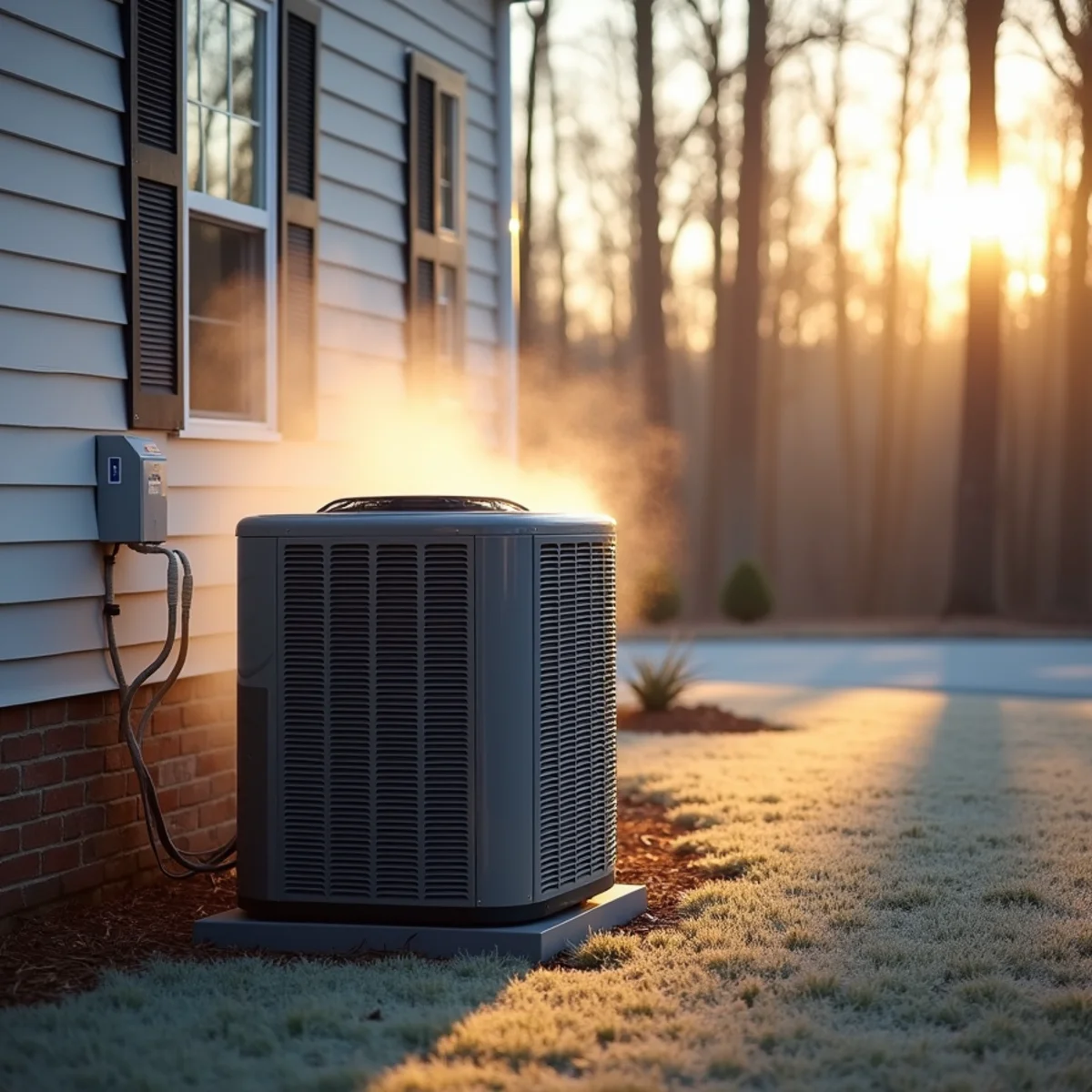
When outdoor temperatures drop toward freezing and the air is damp, frost builds on the outdoor coil. On a Piedmont winter morning in the 20s and 30s with high humidity, that happens fast. To clear it, the defrost control reverses the system for a few minutes and sends warm refrigerant to the outdoor coil.
- The outdoor fan stops, and you may hear a loud whoosh as the reversing valve shifts.
- Steam rises from the outdoor unit. It looks alarming, but it is frost melting, not smoke.
- Indoors, the air may feel cool for a few minutes unless the auxiliary heat strips come on, which most systems use during defrost.
- When the coil is clear, the valve shifts back with another whoosh, the fan restarts and warm air returns.
Defrost typically lasts a few minutes and repeats at intervals, often every 30 to 90 minutes of runtime in frosty weather. A thin layer of frost that comes and goes is normal.
Signs It Is a Breakdown, Not Defrost
| What you notice | Likely meaning | What to do |
|---|---|---|
| Cool air for a few minutes, steam outside, outdoor fan stopped | Normal defrost | Wait it out |
| Cold air for 15 minutes or more with the outdoor unit running | Reversing valve stuck in cooling, low refrigerant or a thermostat setup error | Check the thermostat, then call |
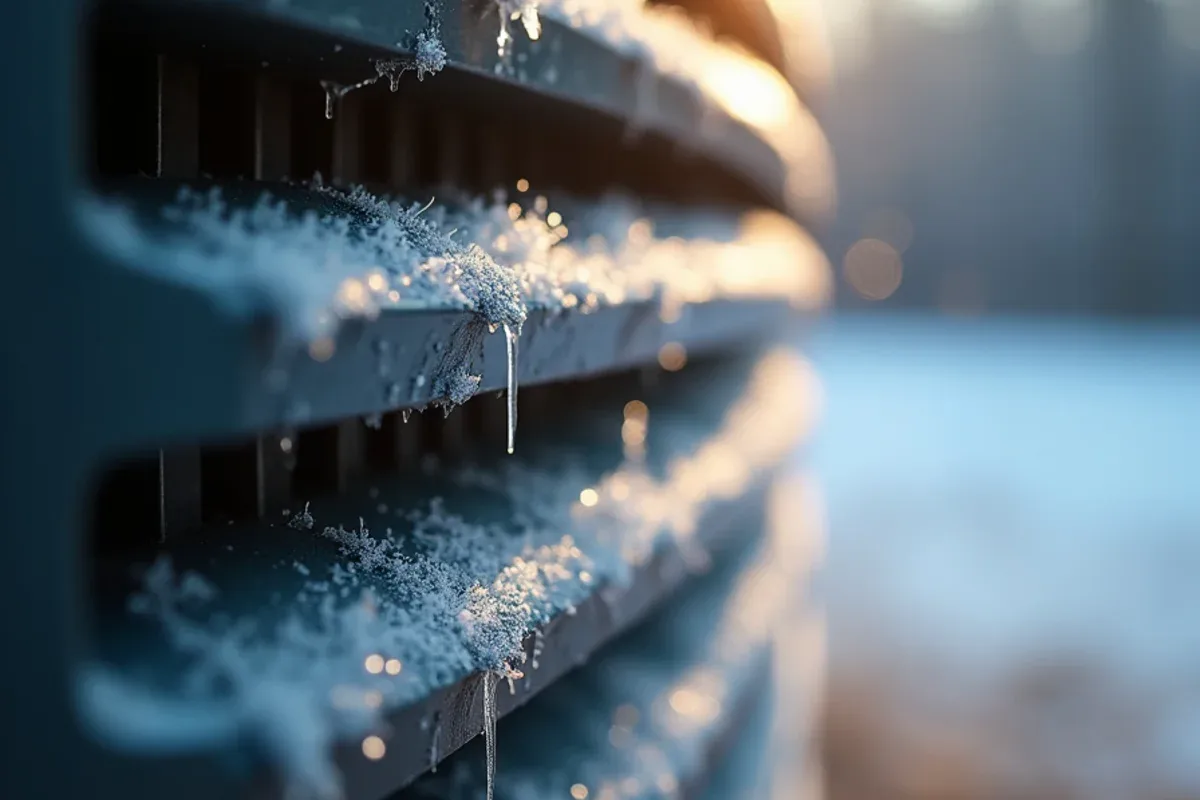
| Outdoor coil solid with ice, fan blocked or not turning | Failed defrost board or sensor, fan motor, or ice storm buildup | Switch to emergency heat and call |
| Heat falls behind on very cold nights and the bill jumps | Auxiliary heat not working, or the heat pump past its limit | Check the air handler breakers, then call |
| Outdoor unit silent while the indoor fan blows cool air | Tripped breaker, failed capacitor or contactor | Reset the breaker once, then call |
A short burning-dust smell the first time the heat strips run each fall is common. A smell that lingers, or any smoke, is not: turn the system off at the thermostat and call.
Safe Checks Before You Call
- 1Thermostat mode. Confirm it says Heat, not Cool or an Auto setting with a low cooling setpoint. Set the fan to Auto. With the fan on On, the blower runs between heating cycles and pushes room-temperature air that feels cold.
- 2A new thermostat? If the problem started after a thermostat replacement, the reversing valve setting may be wrong. Heat pump thermostats energize the valve on either an O or a B terminal, and a mismatch makes the system cool when it should heat.
- 3Breakers. Heat pumps usually have one breaker for the outdoor unit and one or two larger breakers for the air handler and its heat strips. Reset a tripped one once.
- 4Filter. A clogged filter cuts airflow and can trip the heat strips on their high-limit switch.
- 5Outdoor unit. Clear leaves, pine straw or snow from around and on top of the unit.
Never chip, scrape or hammer ice off a heat pump coil, and do not pour boiling water on it. The aluminum fins and copper tubing puncture easily, and a refrigerant leak in January turns a service call into a major repair.
Emergency Heat, Ice Storms and Cold Snaps
Emergency heat (EM heat on many thermostats) shuts off the outdoor unit and heats the house with the electric strips in the air handler, or with the furnace on a dual-fuel system. Use it when the outdoor unit is iced solid, grinding or banging, or physically damaged. It keeps the house warm until a technician arrives, but electric strip heat is expensive to run, so expect a jump on the Duke Energy bill if it runs for days.
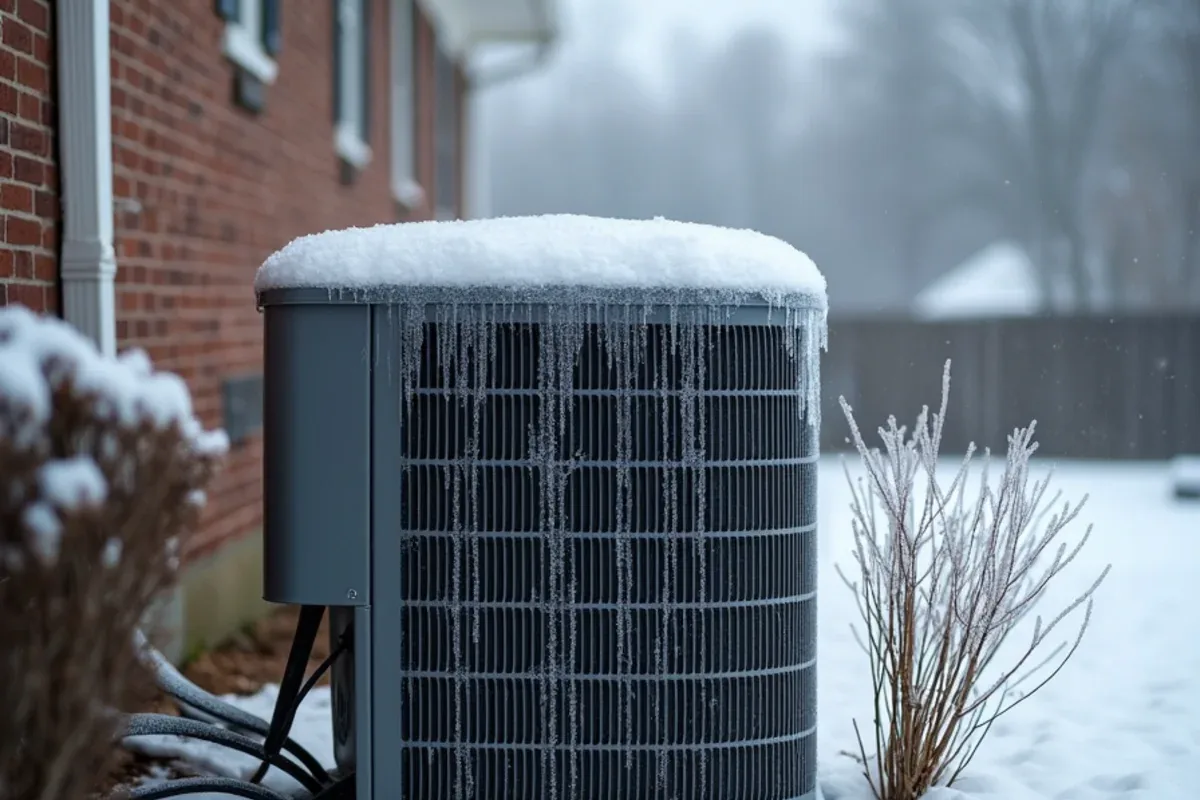
Ice storms are the Piedmont's version of this problem. Freezing rain can coat the outdoor unit and its fan grille in a shell the defrost cycle cannot clear, and the outages and surges that follow can take out control boards and capacitors. Once power returns, if the heat pump will not restart or runs without heating, switch to emergency heat and call.
The Repairs Behind Real Cold-Air Calls
Reversing valve and solenoid
The reversing valve directs refrigerant for heating or cooling. A failed solenoid coil is a modest electrical repair. A valve stuck partway needs refrigerant recovery, brazing and a recharge.
Defrost board and sensors
If the board or the coil sensor fails, the unit either never defrosts and ices over, or defrosts too often and blows cool air for long stretches.
Low refrigerant
A leak shrinks heating capacity first, so the house falls behind on cold nights. The fix is finding and repairing the leak, done by an EPA Section 608 certified technician, not simply adding refrigerant.
Auxiliary heat strips and sequencers
Burned elements, a tripped high limit or a failed sequencer leave the heat pump to fight the coldest nights alone. Details on these repairs and replacement options are on our heat pump repair page.
Why the Coldest Nights Feel Different: The Balance Point
Every heat pump has a balance point: the outdoor temperature where its heating output just matches what the house is losing. Above it, the heat pump carries the load alone; below it, auxiliary heat strips (or the gas furnace on a dual-fuel system) have to help. For most homes it falls somewhere around the 20s to low 30s, depending on the house and how the system was sized. Around Matthews, January lows sit near freezing, so many winter nights land right at that line.
- Air that feels lukewarm on a 25-degree night is often a healthy heat pump working near its balance point, not a failure, as long as the house holds the setpoint.
- Big thermostat setbacks backfire. Dropping the heat 6 or 8 degrees overnight forces a big recovery in the morning, and many thermostats call the heat strips to do it. Small setbacks, or a thermostat with smart recovery for heat pumps, keep the strips off.
- A new thermostat set to the wrong reversing-valve setting (the O/B option) makes the system cool when it should heat. If cold air started right after a thermostat swap, check that setting first.
Getting Help in Indian Trail, Waxhaw and Matthews
Many heat pumps in Indian Trail's 1995 to 2010 subdivisions are original or on their first replacement, and the oldest give out on the first hard freeze of the year. HVAC service in Indian Trail is about 12 to 18 minutes from Matthews. In Waxhaw, where most homes went up after 2005, heat pumps are reaching their first major repairs, and HVAC service in Waxhaw is about 30 to 35 minutes out. Actual timing depends on the nearest available technician and is confirmed on the call.
If the house is losing heat on a freezing night, our 24/7 emergency HVAC repair line is answered by a live person. Every HVAC technician we send is licensed and insured in North Carolina. The technician diagnoses first and you approve a written price before work begins. If the system is old enough that replacement is on the table, read repair or replace a 15-year-old HVAC system.
The Bottom Line on a Heat Pump Blowing Cold Air
Give it 10 to 15 minutes: steam, a quiet outdoor fan and a short burst of cool air are defrost doing its job, and lukewarm air on the coldest nights can be normal near the balance point. Ice that will not clear, cold air that lasts, a whoosh that never comes or a house that keeps losing ground is a fault. Switch to emergency heat, keep the setback small, and call for heat pump repair; the line at (321) 478-0693 is answered 24/7.
From the job site
Cold-air calls on Matthews-area heat pumps
The first night each winter that drops into the low 20s brings a wave of calls from homes that have not needed full heat since the previous February. Some are normal defrost cycles that a new owner has simply never noticed. The rest tend to be failed defrost sensors, heat strip elements that gave out after sitting idle all summer, and thermostats replaced in the fall with the O/B setting wrong.
Ice storms create their own pattern. Freezing rain coats outdoor units faster than defrost can melt it, and the power blinks that follow are hard on control boards. After a storm, a heat pump that runs but blows cool air is often iced over or sitting on a tripped breaker, and emergency heat until the ice clears is the right move.
- Units sitting low in mulch beds can freeze into their own meltwater; a raised pad helps.
- Have the auxiliary heat tested during a fall visit, not on the first cold night.
- On dual-fuel systems the gas furnace should take over below its set balance point; if it never does, the outdoor sensor or control setup needs checking.
Related questions
Is it normal for my heat pump to blow cold air in winter?
Why is there steam coming from my heat pump?
When should I switch my thermostat to emergency heat?
Can an ice storm damage my heat pump?
Written by the Littleton Premier Heating & Air team for homeowners in Matthews and nearby communities. General information, not a diagnosis or engineering advice: leave refrigerant, electrical and gas work to a licensed HVAC technician, who has the final word on your system. Every HVAC technician we send is licensed and insured in North Carolina. Last reviewed October 2026.